


DongHai's YG-1: A Vulcanizing Agent Manufacturer Explains Crosslink-Hardness Relationship
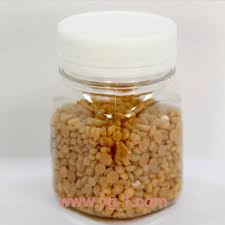
A rubber chemist formulates a seal for a hydraulic pump. The finished part feels too soft. It extrudes under pressure. The next batch comes out too hard. It cracks during installation. Both failures trace back to the same variable: crosslink density. A Vulcanizing Agent from YG-1, produced by Taizhou Huangyan Donghai Chemical Co., Ltd., controls how many bridges form between rubber molecules. This number determines final hardness. Yet many compounders adjust filler levels instead of optimizing their cure system. This situation raises a direct question for any rubber processor: how does a vulcanizing agent influence the crosslink density and therefore the hardness of a rubber compound?
Crosslink density measures the number of chemical bridges between polymer chains. Raw rubber has zero crosslinks. It flows like a viscous liquid. A vulcanizing agent creates sulfur bridges or carbon carbon bonds between chains. YG-1's sulfur-based agents form polysulfidic links. Each sulfur atom acts as a bridge. More bridges mean a tighter network. The rubber resists deformation. A lightly crosslinked compound feels soft and flexible. A heavily crosslinked compound feels hard and rigid.
Sulfur concentration directly controls crosslink density in conventional cure systems. A compound with one part sulfur per hundred rubber creates few bridges. YG-1's high sulfur formulations produce dense crosslinking. The same base polymer yields a hard part. A compounder who reduces sulfur from two parts to half a part sees a significant drop in Shore hardness. The relationship is not linear. Small sulfur increases cause large hardness jumps after a threshold concentration.
Accelerator choice modifies how the vulcanizing agent forms crosslinks. A fast accelerator creates many short sulfur bridges. YG-1's ultra accelerator systems produce high crosslink density even with low sulfur. A slow accelerator with the same sulfur level leaves many bridges unfinished. The crosslink density stays low. The rubber remains soft. A compounder who switches accelerator packages changes hardness without touching the vulcanizing agent concentration. The interaction between accelerator and curing agent determines final properties.
Peroxide vulcanizing agents create carbon carbon crosslinks. These bonds are shorter and stronger than sulfur bridges. YG-1's peroxide grades produce a different hardness response. A small peroxide addition creates significant crosslink density. The hardness rises quickly with low dosage. The plateau occurs at lower concentrations than sulfur. A compounder substituting peroxide for sulfur must adjust the entire formulation. A direct swap gives a much harder part because each peroxide molecule creates one crosslink while each sulfur atom creates a chain of multiple links.
Metal oxide vulcanizing agents work for specialty elastomers like neoprene. YG-1's zinc oxide and magnesium oxide grades react with chlorine sites on the polymer. The crosslink density depends on stoichiometry. Too little oxide leaves unreacted sites. The rubber stays soft. Too much oxide creates brittle crosslinks. The hardness peaks sharply at the correct oxide level. A compounder who misses the precise ratio produces a seal that either extrudes or cracks. The narrow window demands exact weighing.
Crosslink density affects compression set as well as hardness. A lightly crosslinked seal compresses and springs back slowly. YG-1's higher density cure returns to shape faster. The seal maintains its sealing force over time. An over crosslinked seal takes a permanent set under compression. The material flows into the gap and never recovers. The hardness number alone does not predict this behavior. A compounder must balance crosslink density for the application. A tire tread needs moderate hardness with low heat buildup. A mounting bushing needs high hardness with good resilience.
Testing crosslink density requires a solvent swell test. A cured sample sits in toluene for a defined period. YG-1's lab technicians measure the weight gain. Less swelling means higher crosslink density. The test confirms whether the vulcanizing agent achieved the intended network. A compound that swells too much lacks sufficient bridges. The hardness reading will drop in service. A compound that swells too little may be over cured. The part cracks under flexing. The solvent test guides adjustments before production.
Equipment calibration affects crosslink consistency. A mold that runs hot creates extra crosslinks near the surface. YG-1's vulcanizing agents maintain stable performance across a narrow temperature window. A press that varies by ten degrees changes the hardness of the finished part. The compounder must control both chemistry and processing. A perfect recipe fails in a poorly maintained press.
For any rubber product requiring precise hardness control, https://www.yg-1.com/news/industry-news/brief-introduction-of-5-types-of-rubber-vulcanizing-agents-1.html shows YG-1's Vulcanizing Agent selection guide, where DongHai engineers list crosslink density potential for sulfur, peroxide, and metal oxide systems. A soft compound needs few bridges. A hard compound needs many bridges. Which crosslink density turns your raw polymer into a finished part that lasts?
- Ask Nguza
- Food and Recipes
- Lifestyle
- Parenting
- Education
- Career & Business
- Sports
- Entertainment
- Marketing & Blogging
- Travel
- Confessions / Anonymous Talk
- Local News & Gossip
- Memes & Fun
- Art
- Hot Topics / Trending
- Causes
- Crafts
- Dance
- Drinks
- Film
- Fitness
- Food
- Giochi
- Gardening
- Health
- Home
- Literature
- Music
- Networking
- Altre informazioni
- Party
- Religion
- Shopping
- Sports
- Theater
- Wellness
- Personal Development
- Technology
- Finance
 Italiano
 English
 Arabic
 French
 Spanish
 Portuguese
 Deutsch
 Turkish
 Dutch
Dutch
 Russian
 Romaian
 Portuguese (Brazil)
 Greek
Greek
