


The Future of AC Motors: Smart, Efficient, and Sustainable
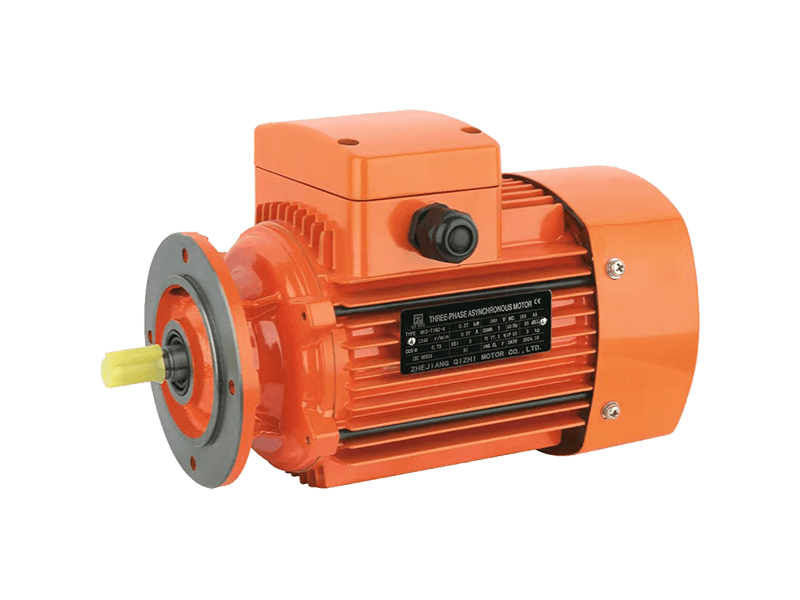
As one of the largest consumers of electrical energy globally, the collective efficiency of AC motors has profound economic and environmental implications. This has driven continuous innovation in the materials, design, and operational management of these motors. The construction of a reliable AC motor is a careful balance of electromagnetic performance, thermal management, and mechanical integrity. Today, the frontier of AC motor technology extends beyond mere electromagnetic conversion, focusing on integration with digital systems, the use of advanced materials, and alignment with global sustainability goals. Understanding these aspects provides insight into how this mature technology continues to advance and why it will remain vital in a future focused on energy conservation and smart automation.
Efficiency is a paramount concern in AC motor engineering. Energy losses occur through several mechanisms: resistance in the windings (copper losses), magnetic hysteresis and eddy currents in the core steel (iron losses), and friction in the bearings (mechanical losses). Premium efficiency motors attack these losses through design improvements. They use more copper with a larger cross-section to reduce resistance, higher-grade electrical steel with thinner laminations to minimize eddy currents, and optimized cooling designs to maintain lower operating temperatures. International standards (such as IE efficiency classes) define these levels, guiding purchasers. The return on investment for a high-efficiency AC motor often comes from reduced electricity costs over its operational life, making it a key strategy for industrial energy management.
The physical construction of an industrial AC motor is engineered for decades of service. The stator core is built from hundreds of thin, insulated laminations of silicon steel, pressed together to form a solid yet magnetically efficient core. Copper or aluminum windings are precisely inserted into the stator slots and impregnated with insulating varnish. The rotor, whether a cast aluminum squirrel cage or a wound design, is also laminated and dynamically balanced. The entire assembly is housed in a rigid frame, typically cast iron or aluminum, which provides mechanical protection and a path for heat dissipation. Bearings are selected for the load and speed, and enclosures range from open drip-proof (ODP) to totally enclosed fan-cooled (TEFC) to protect the motor from environmental contaminants. This robust construction ensures the AC motor can withstand the vibrations, dirt, and thermal cycling of industrial environments.
The future of the AC motor is closely tied to digitization and sustainability trends. The integration of sensors and connectivity is giving rise to the "smart motor." Embedded sensors can monitor temperature, vibration, and electrical signature in real-time. This data enables predictive maintenance, where the motor itself can signal the need for service before a failure occurs, preventing costly downtime. Furthermore, the synergy between AC motors and advanced motor drives is tightening. Next-generation wide-bandgap semiconductor drives (using SiC or GaN) are smaller and more efficient, enabling even better control and energy savings. Material science is also contributing, with research into amorphous metal cores that have significantly lower core losses, potentially raising AC motor efficiency to new levels.
The AC motor is undergoing a quiet revolution. While its fundamental operating principle remains unchanged, every aspect surrounding it—from the materials in its core to the intelligence in its controller—is advancing. The drive for efficiency reduces operational costs and carbon footprints, while smart features enhance reliability and system integration. As global emphasis on electrification and energy efficiency intensifies, the role of the optimized, connected AC motor becomes even more critical. It is evolving from a commodity component into a sophisticated, data-generating asset within the Industrial Internet of Things. This journey ensures that the AC motor, a technology over a century old, will continue to be a foundational and progressive element in powering a more efficient and automated world.

- Ask Nguza
- Food and Recipes
- Lifestyle
- Parenting
- Education
- Career & Business
- Sports
- Entertainment
- Marketing & Blogging
- Travel
- Confessions / Anonymous Talk
- Local News & Gossip
- Memes & Fun
- Art
- Hot Topics / Trending
- Causes
- Crafts
- Dance
- Drinks
- Film
- Fitness
- Food
- Jogos
- Gardening
- Health
- Início
- Literature
- Music
- Networking
- Outro
- Party
- Religion
- Shopping
- Sports
- Theater
- Wellness
- Personal Development
- Technology
- Finance
 Portuguese (Brazil)
 English
 Arabic
 French
 Spanish
 Portuguese
 Deutsch
 Turkish
 Dutch
Dutch
 Italiano
 Russian
 Romaian
 Greek
Greek
