


The Industrial Workhorse: Core Principles of the Three-Phase Asynchronous Motor
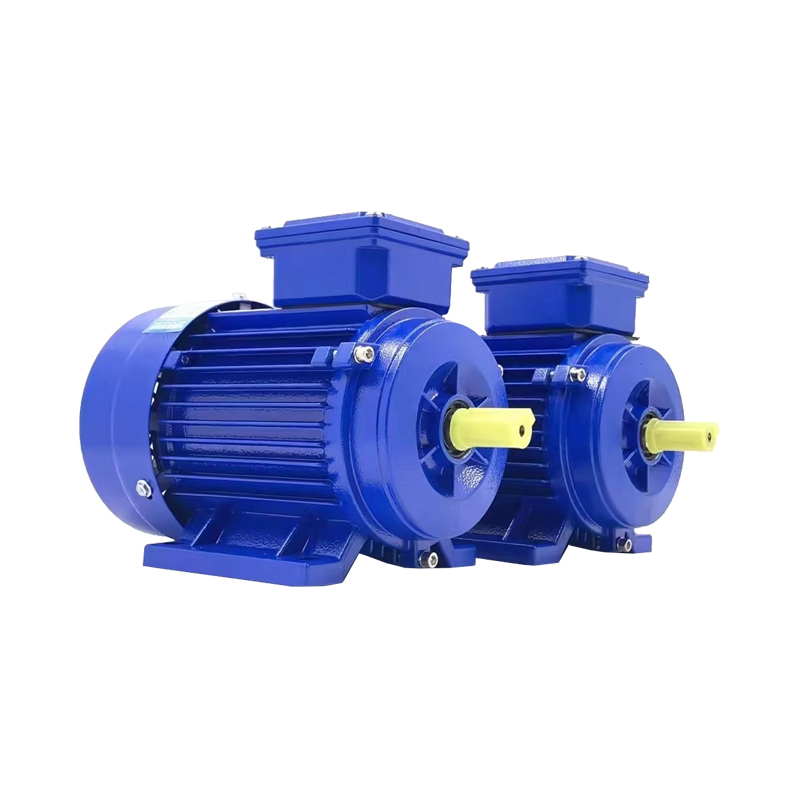
The three-phase asynchronous motor is a dominant force in industrial motion, a machine that converts electrical energy into mechanical rotation through the principle of electromagnetic induction. Its operation begins with a three-phase alternating current supplied to stator windings, generating a magnetic field that rotates at a synchronous speed. A key characteristic is that the motor’s rotor always turns at a speed slightly slower than this rotating field, a difference known as slip. This slip induces currents in the rotor, and the interaction between these currents and the stator’s magnetic field produces torque. This design, particularly in its robust squirrel-cage form, offers notable reliability and requires comparatively simple maintenance. The three-phase asynchronous motor is therefore a prevalent solution for driving pumps, fans, compressors, and conveyor systems. This exploration details its construction and working theory, concluding with a reflection on the enduring role of this three-phase asynchronous motor in powering modern infrastructure.
Constructively, the three-phase asynchronous motor comprises two main sections: the stator and the rotor. The stator, the stationary part, features a laminated steel core with slots that hold a three-phase winding set. When energized, this winding creates the rotating magnetic field crucial for operation. The rotor, typically a squirrel-cage type, consists of conductive bars embedded within a laminated core and short-circuited by end rings, forming a durable, self-contained circuit. As the stator’s field rotates past these bars, it induces a voltage and subsequently a current within them. The magnetic field generated by this induced rotor current then interacts with the original stator field to create a turning force. The simplicity of this rotor design in a three-phase asynchronous motor contributes greatly to its ruggedness and widespread use.
Performance attributes of the three-phase asynchronous motor explain its industrial prevalence. It is inherently self-starting, developing torque immediately upon connection to a suitable three-phase supply. Its speed is largely determined by supply frequency and the number of magnetic poles in its design, making it naturally suited for near-constant speed applications. While its speed regulation under load is not precise without external controls, its mechanical characteristic is acceptably stiff for many constant-torque loads. The absence of brushes and sliding electrical contacts, as found in DC motors, minimizes wear and sparks, allowing a three-phase asynchronous motor to operate reliably in dusty or humid environments where maintenance access is difficult.
Starting and control methods are important practical considerations. A direct-on-line start can cause high inrush current, potentially disturbing the electrical network. To mitigate this, starting techniques such as star-delta switching or soft starters are commonly employed with a three-phase asynchronous motor. For applications requiring speed control, the use of a variable frequency drive has become standard. A VFD adjusts the frequency and magnitude of the voltage supplied to the motor, enabling smooth and efficient speed variation. This transforms the three-phase asynchronous motor from a fixed-speed device into a flexible component for variable-speed drives, significantly expanding its utility in process control and energy-saving applications.
The three-phase asynchronous motor remains a testament to effective and durable engineering. Its operation, grounded in reliable electromagnetic induction, delivers consistent performance across decades of service. It may not offer the precision control of some newer motor technologies, but its combination of robustness, cost-effectiveness, and adaptability ensures its continued position as a fundamental driver in global industry. From moving air in ventilation systems to powering heavy machinery, the three-phase asynchronous motor performs its duty with quiet persistence, proving that a well-conceived electromechanical design can maintain critical relevance over the long term.
- Ask Nguza
- Food and Recipes
- Lifestyle
- Parenting
- Education
- Career & Business
- Sports
- Entertainment
- Marketing & Blogging
- Travel
- Confessions / Anonymous Talk
- Local News & Gossip
- Memes & Fun
- Art
- Hot Topics / Trending
- Causes
- Crafts
- Dance
- Drinks
- Film
- Fitness
- Food
- Spiele
- Gardening
- Health
- Startseite
- Literature
- Music
- Networking
- Andere
- Party
- Religion
- Shopping
- Sports
- Theater
- Wellness
- Personal Development
- Technology
- Finance
 Deutsch
 English
 Arabic
 French
 Spanish
 Portuguese
 Turkish
 Dutch
Dutch
 Italiano
 Russian
 Romaian
 Portuguese (Brazil)
 Greek
Greek
