


Perfect Dosing Tank Solutions for Bulk Chemical Handling
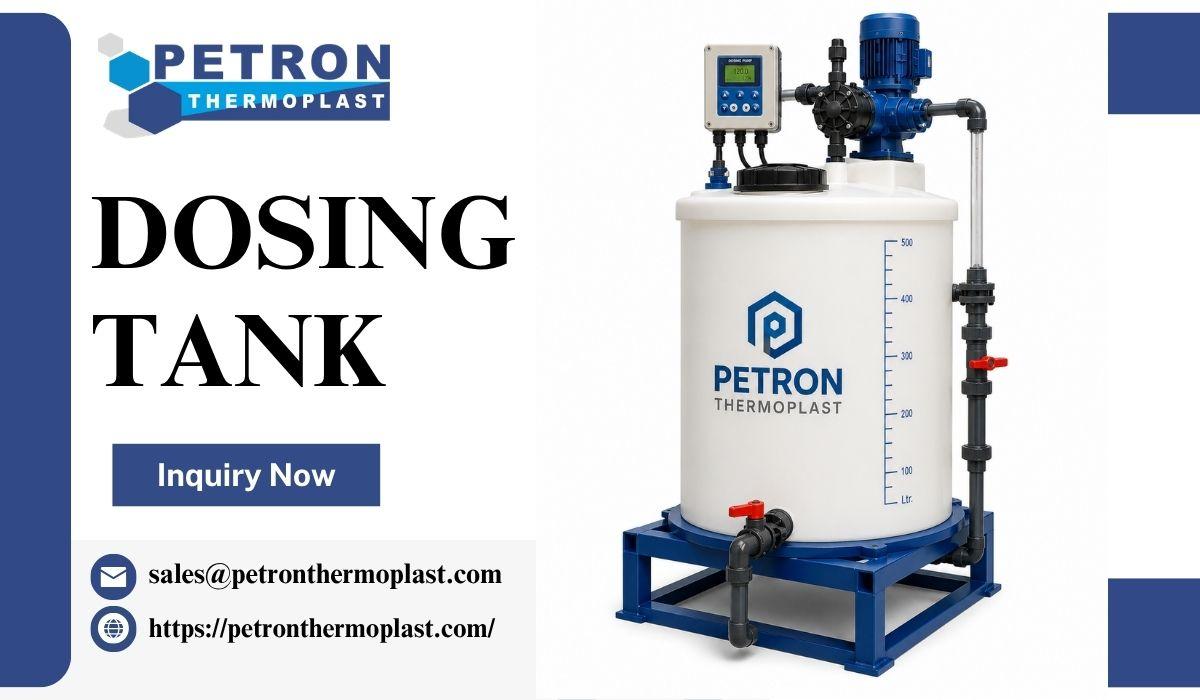
Bulk chemical handling requires reliable storage equipment, controlled chemical transfer, and careful material selection. In industries such as water treatment, chemical manufacturing, electroplating, and wastewater management, even small variations in chemical dosing can affect process performance. A well-designed dosing tank helps operators store, prepare, and supply chemical solutions in the required quantities.
Petron Thermoplast offers customized dosing tank solutions for industrial chemical handling applications. Depending on the chemical and operating conditions, dosing tanks can be manufactured using materials such as HDPE, polypropylene (PP), polypropylene homopolymer (PPH), PVDF, and suitable FRP constructions.
Whether your plant needs a compact tank for chemical preparation or a larger tank for continuous dosing operations, the right design can help improve handling efficiency, simplify maintenance, and support safer plant operation.
What Is a Dosing Tank?
A dosing tank is a container designed to hold, prepare, mix, or supply liquid chemicals to a process. It commonly works with a chemical dosing pump or metering pump, which transfers a controlled quantity of liquid into a pipeline, treatment system, or process vessel.
In bulk chemical handling, a dosing tank can serve as an intermediate storage and preparation unit. Operators can prepare a solution, monitor its level, and maintain a consistent supply for the dosing system.
Depending on the application, a dosing tank may include:
- Inlet and outlet connections
- Drain and vent arrangements
- Secure lid or access opening
- Level indicator or level sensor
- Calibration column, where required
- Agitator or mixer provision
- Mounting base or support structure
- Connections compatible with dosing pumps
Why Are Dosing Tanks Important for Bulk Chemical Handling?
When a plant handles chemicals in large quantities, reliable transfer and accurate dosing become essential. A properly selected dosing tank supports daily operations in several ways.
- Controlled Chemical Supply
A dosing tank provides a dedicated source of chemical solution for the dosing pump. This arrangement helps maintain a steady supply to the connected process and reduces the need for repeated manual handling.
- Safer Chemical Handling
A suitable tank design helps contain the chemical and provides planned locations for filling, draining, venting, and inspection. Appropriate lids, connections, and secondary containment can further support safe operation where required.
- Reduced Maintenance Requirements
Selecting a tank material compatible with the stored chemical can help reduce corrosion-related problems and premature material damage. Inspection and maintenance are still necessary, but correct material selection can improve long-term reliability.
- Better Process Efficiency
A tank equipped with suitable level monitoring and mixing arrangements can make it easier to manage chemical preparation and replenishment. When connected to the right dosing equipment, it supports a more organized chemical feed process.
- Flexible Installation
Dosing tanks can be designed in different capacities, shapes, and configurations. This flexibility helps industrial facilities accommodate equipment within their available floor space and existing pipeline layouts.
Key Features of a Well-Designed Dosing Tank
A dosing tank should be designed around the actual needs of the chemical handling system. Important features may include:
- Chemical-resistant construction: The selected material should suit the chemical and operating environment.
- Leak-resistant fabrication: Properly manufactured joints and compatible fittings help reduce leakage risks.
- Level monitoring: A level indicator or sensor helps operators track the remaining chemical solution.
- Pump compatibility: Correct outlet positioning and connections support integration with dosing pumps.
- Mixing provision: An agitator can be included when the solution requires continuous or periodic mixing.
- Easy access: A suitable lid or inspection opening can simplify cleaning and maintenance.
- Customized connections: Inlet, outlet, drain, and vent positions can be planned around the installation.
- Suitable support: The base or support structure should account for the tank's dimensions and full operating load.
Industrial Applications of Dosing Tanks
Dosing tanks are used across industries where chemicals must be prepared, stored, and introduced into a process in controlled quantities.
Water and Wastewater Treatment
Water treatment plants use dosing tanks for chemicals involved in pH adjustment, disinfection, coagulation, and other treatment stages. Suitable tank and pump arrangements help operators manage the chemical supply required by the treatment process.
Effluent Treatment Plants (ETP)
ETP systems may require controlled dosing of neutralizing agents, coagulants, and flocculants. A correctly sized dosing tank helps provide a reliable supply of these treatment chemicals.
Sewage Treatment Plants (STP)
Dosing tanks can support the addition of disinfectants and other treatment chemicals. The tank material and accessories must be compatible with the specific solution being handled.
Chemical Manufacturing
Chemical production facilities may use dosing tanks to prepare additives, supply process chemicals, or feed liquids into reactors and pipelines. Customized nozzle arrangements can help integrate the tank into existing plant equipment.
Electroplating and Metal Finishing
Electroplating operations often involve acids, alkalis, and process additives. Dosing tanks can support chemical preparation and controlled feeding for selected surface-treatment applications.
Fertilizer and General Manufacturing
Fertilizer production and other manufacturing processes may require measured chemical addition at different stages. A suitable dosing system helps organize chemical supply and supports consistent process operation.
How to Choose the Right Dosing Tank for Bulk Chemical Handling?
Before placing an order, evaluate the following factors.
1. Identify the Chemical
Provide the chemical name, concentration, and relevant safety information. Chemical compatibility should be verified for the actual operating conditions rather than based on the chemical name alone.
2. Calculate the Required Capacity
Consider daily chemical consumption, dosing rate, batch size, delivery frequency, and replenishment time. The tank should provide sufficient working capacity without creating unnecessary storage or handling challenges.
3. Select the Correct Material
Compare suitable materials based on chemical resistance, operating temperature, mechanical strength, and expected service life. Ask the manufacturer to confirm material suitability for the specific application.
4. Confirm Operating Conditions
Specify the maximum and normal operating temperatures, liquid density or specific gravity, and whether mixing is required. These details can affect tank wall thickness, reinforcement, and support design.
5. Check Pump and Pipeline Connections
Confirm the dosing pump type, required flow arrangement, pipe size, and inlet and outlet positions. Correct connection planning helps simplify installation and maintenance.
6. Review Safety Requirements
Consider venting, overflow management, access for inspection, spill containment, and any requirements associated with hazardous chemicals. The complete installation should follow applicable safety procedures and regulations.
Custom Dosing Tank Solutions by Petron Thermoplast
Petron Thermoplast manufactures customized industrial tanks for chemical storage and handling applications. Dosing tank requirements can vary from one facility to another, so material selection, dimensions, connections, and accessories should be discussed before manufacturing.
Customization may include:
- Tank capacity and dimensions based on the application
- Selection of a suitable thermoplastic or FRP construction
- Inlet, outlet, drain, and vent connections
- Level indicator or sensor provisions
- Agitator mounting arrangements where required
- Customized tank covers and access openings
- Mounting and support arrangements
- Fabrication according to approved drawings and project requirements
Installation and Maintenance Tips
Correct installation and routine inspection help support safe, reliable tank operation.
- Install the tank on a suitable, level support designed for the filled tank's weight.
- Check all connections, joints, and fittings before introducing chemicals.
- Use compatible valves, hoses, gaskets, and dosing pump components.
- Monitor liquid levels and inspect the tank regularly for signs of damage or leakage.
- Follow the chemical supplier's handling instructions and use appropriate personal protective equipment.
- Clean the tank using a method compatible with the tank material and stored chemical.
- Avoid unauthorized drilling, welding, or modifications after installation.
- Do not expose an atmospheric tank to pressure or vacuum conditions unless it is specifically designed for them.
Conclusion
Choosing the right dosing tank is an important part of managing bulk chemical handling efficiently. Material compatibility, tank capacity, operating temperature, connection layout, and safety provisions all influence performance. A properly selected tank can support controlled chemical supply, organized maintenance, and dependable integration with industrial dosing equipment.
Petron Thermoplast provides customized dosing tank solutions for a range of industrial requirements. Contact the team with your chemical details, capacity requirements, and project specifications to identify a suitable configuration for your plant.
- Ask Nguza
- Food and Recipes
- Lifestyle
- Parenting
- Education
- Career & Business
- Sports
- Entertainment
- Marketing & Blogging
- Travel
- Confessions / Anonymous Talk
- Local News & Gossip
- Memes & Fun
- Art
- Hot Topics / Trending
- Causes
- Crafts
- Dance
- Drinks
- Film
- Fitness
- Food
- Oyunlar
- Gardening
- Health
- Home
- Literature
- Music
- Networking
- Other
- Party
- Religion
- Shopping
- Sports
- Theater
- Wellness
- Personal Development
- Technology
- Finance
 Turkish
 English
 Arabic
 French
 Spanish
 Portuguese
 Deutsch
 Dutch
 Italiano
 Russian
 Romaian
 Portuguese (Brazil)
 Greek
