


Double Block and Bleed Valve: Advantages, Limitations and Applications
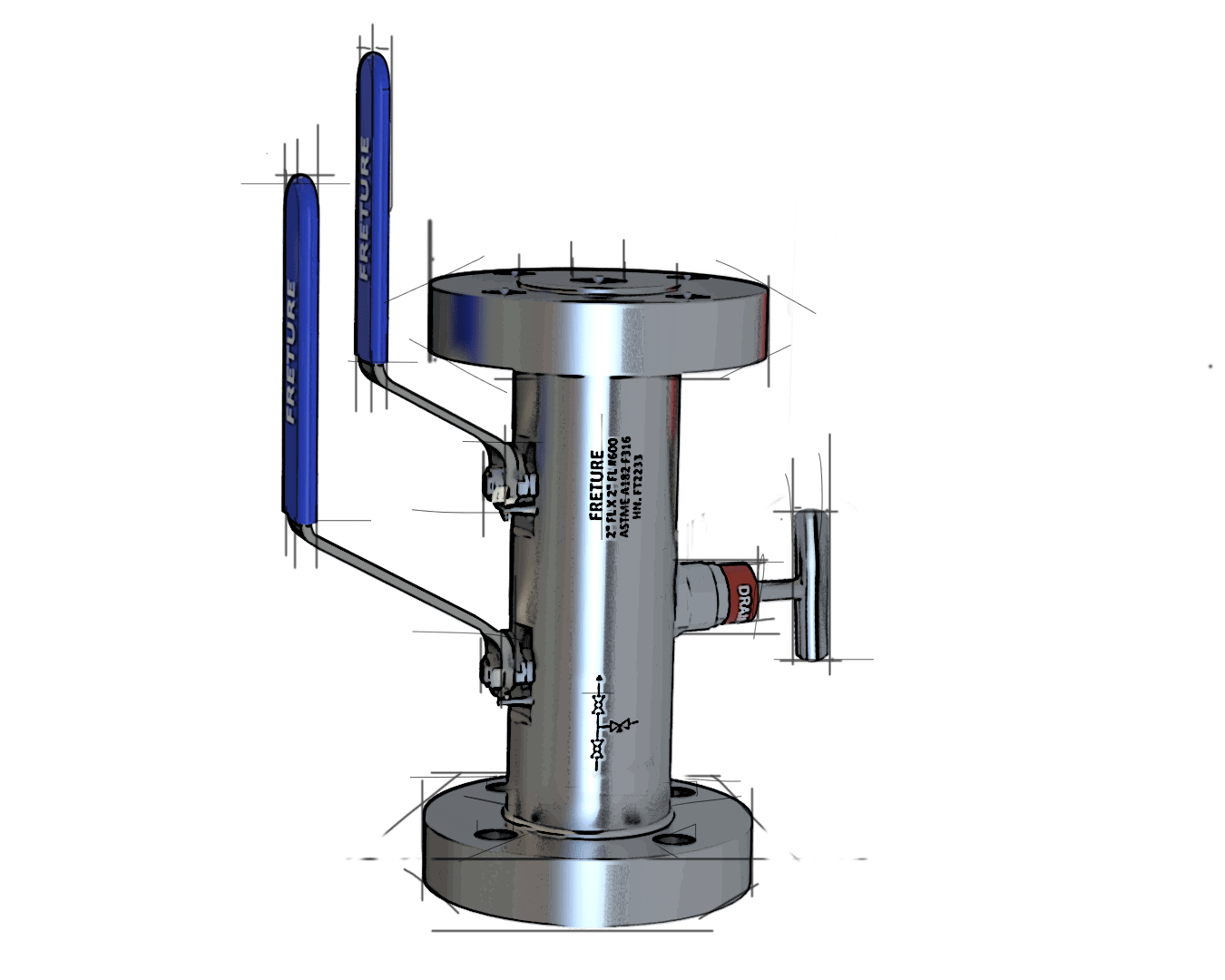
A Double Block and Bleed Valve is an isolation valve arrangement designed to provide two blocking barriers and a bleed connection between them. This configuration is used in industrial systems where process isolation and pressure management are important. DBB valves are found across oil and gas, petrochemical, chemical, power, and other process applications.
How a DBB Valve Provides Isolation
A conventional isolation valve provides a single primary barrier when closed. A DBB valve incorporates two blocking mechanisms.
When both barriers are closed, the section between them forms an intermediate cavity. A bleed connection can be used to release trapped pressure or monitor the cavity condition.
The exact isolation behavior depends on the valve design, seat arrangement, pressure conditions, and installation configuration.
Advantages of DBB Valves
Two Isolation Barriers
The primary characteristic of a DBB valve is its two independent blocking barriers. This arrangement can be useful for applications requiring enhanced process isolation.
Intermediate Bleed Function
The bleed connection allows operators to manage pressure within the cavity between the blocking barriers. It can also be used as part of an isolation verification procedure.
Compact Arrangement
An integrated DBB valve can reduce the number of separate valves and piping components required in certain installations. This can help simplify layouts where space is limited.
Reduced Potential Leak Paths
Using an integrated valve arrangement can reduce the number of external connections compared with some conventional multi-valve configurations. The actual leakage performance depends on the valve design, manufacturing quality, installation, and operating conditions.
Maintenance Support
DBB valves can be used at selected equipment isolation points to support maintenance and inspection procedures. The appropriate isolation procedure must always be established by the facility.
Limitations and Considerations
Although DBB valves offer useful features, they are not automatically suitable for every process system.
The valve may have a more complex internal design than a conventional isolation valve. Correct selection therefore requires detailed consideration of pressure, temperature, process fluid, materials, seat design, and cavity pressure behavior.
Installation and maintenance procedures must also account for the bleed connection and potential trapped pressure.
Another consideration is cost. An integrated DBB valve may have a higher initial purchase cost than a basic single isolation valve. The overall evaluation should consider the complete installation, space, piping, maintenance, and operational requirements rather than only the valve purchase price.
Industrial Applications
DBB valves are used in several process industries.
Oil and Gas
Applications include pipelines, wellhead-related systems, gas processing facilities, metering stations, storage terminals, and process isolation points.
Refineries
DBB valves can be used around pumps, vessels, process equipment, meters, and hydrocarbon process lines where controlled isolation is required.
Petrochemical Plants
Chemical and hydrocarbon processing units can use DBB valves for selected process isolation applications.
Chemical Industries
Material and seat selection can be customized according to the chemical properties, concentration, temperature, and pressure of the process medium.
Selection Factors
Important factors include nominal valve size, pressure class, design temperature, body material, trim material, seat material, process fluid, end connection, actuation method, installation orientation, and applicable standards.
The required bleed configuration should also be considered. Depending on the process, the bleed outlet may need to be connected to a controlled drainage, recovery, or containment system.
DBB Valve Maintenance
Regular inspection and testing help maintain valve performance. Maintenance programs may include visual inspection, actuator checks, leakage monitoring, bleed connection inspection, and functional testing.
Testing frequency should be determined according to the valve manufacturer's recommendations, facility procedures, operating conditions, and applicable regulations or standards.
Conclusion
Double Block and Bleed Valves provide a specialized isolation arrangement combining two blocking barriers with an intermediate bleed function. They can be useful in applications where process isolation, pressure management, and compact valve arrangements are important. However, selection should always be based on actual process conditions, engineering requirements, applicable standards, and the facility's operating and maintenance procedures.
- Ask Nguza
- Food and Recipes
- Lifestyle
- Parenting
- Education
- Career & Business
- Sports
- Entertainment
- Marketing & Blogging
- Travel
- Confessions / Anonymous Talk
- Local News & Gossip
- Memes & Fun
- Art
- Hot Topics / Trending
- Causes
- Crafts
- Dance
- Drinks
- Film
- Fitness
- Food
- Jocuri
- Gardening
- Health
- Home
- Literature
- Music
- Networking
- Alte
- Party
- Religion
- Shopping
- Sports
- Theater
- Wellness
- Personal Development
- Technology
- Finance
 Romaian
 English
 Arabic
 French
 Spanish
 Portuguese
 Deutsch
 Turkish
 Dutch
 Italiano
 Russian
 Portuguese (Brazil)
 Greek
