


How Barcode Systems Improve Inventory Control for Spare Parts Management
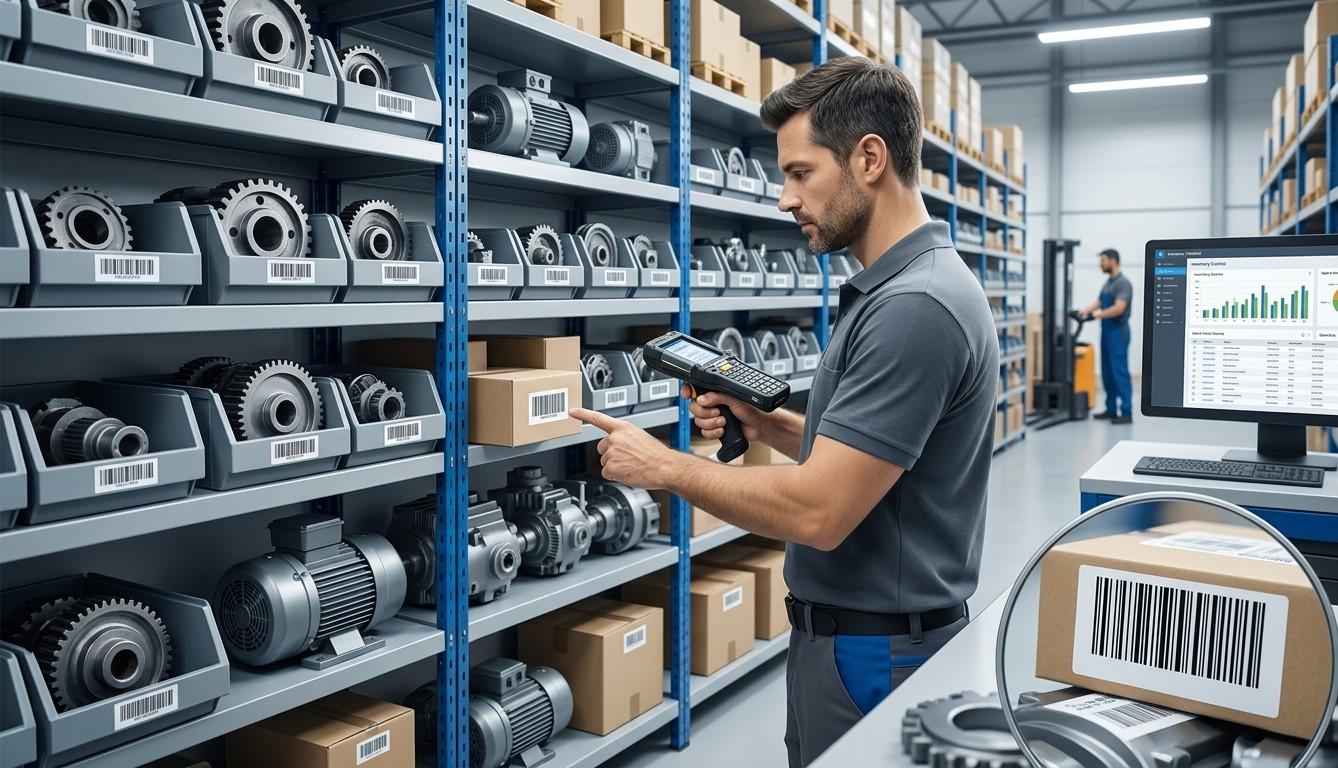
Managing spare parts inventory can be challenging for businesses that depend on machinery, vehicles, production equipment, maintenance systems, and technical assets. Spare parts may vary significantly in size, value, usage frequency, and storage requirements. Without an organized tracking system, businesses can experience misplaced components, inaccurate stock records, unnecessary purchases, and delays in maintenance activities. Pointus Solutions helps businesses implement modern identification and inventory technologies that can improve the way spare parts are tracked and managed. For organizations looking to Shop Barcode equipment and reliable Printing Products, barcode systems provide a practical solution for improving spare parts inventory control.
Barcode technology allows organizations to assign unique identification codes to spare parts and scan them whenever they are received, stored, issued, transferred, or returned. When barcode scanners are integrated with inventory or maintenance management software, businesses can maintain more accurate records of spare parts quantities and locations. This creates better visibility into inventory and helps maintenance teams find the components they need when they need them.
What Is Spare Parts Inventory Management?
Spare parts inventory management is the process of purchasing, storing, tracking, issuing, and replenishing components used to maintain equipment and operational assets.
Spare parts can include:
- Machine components
- Bearings
- Filters
- Belts
- Motors
- Electrical components
- Fasteners
- Hydraulic parts
- Replacement tools
- Vehicle components
- Electronic parts
- Maintenance consumables
Unlike ordinary retail inventory, spare parts may not be used regularly. Some components can remain in storage for months or years before they are required. This makes accurate identification and location tracking especially important.
A well-managed spare parts inventory system helps businesses ensure that critical components are available without maintaining excessive quantities of unnecessary stock.
Why Spare Parts Inventory Control Is Important
Poor spare parts management can affect maintenance operations and overall business productivity. When a required component cannot be located quickly, equipment downtime may increase.
Common problems include:
- Incorrect inventory quantities
- Misplaced spare parts
- Duplicate purchases
- Overstocking
- Stockouts of critical components
- Difficulty identifying similar parts
- Outdated inventory records
- Manual data-entry errors
- Slow issuing and receiving processes
Barcode systems can address many of these challenges by creating a consistent method for identifying and recording spare parts.
How Barcode Systems Work for Spare Parts
A barcode-based spare parts system starts by assigning a unique barcode to each item, part number, storage bin, or location.
When spare parts enter the warehouse, employees scan the barcode and record information such as:
- Part number
- Description
- Quantity
- Supplier
- Storage location
- Purchase information
- Batch or serial number
- Reorder level
When a technician needs a component, the employee can scan the part as it is issued. The inventory system then updates the available quantity.
The same process can be used when parts are returned, transferred, or relocated.
This creates a digital record of spare parts movement throughout the organization.
Improving Spare Parts Identification
One of the major challenges in spare parts management is identifying similar-looking components.
Two parts may have similar dimensions or appearances but completely different specifications. Selecting the wrong component can cause maintenance delays or equipment problems.
Barcode labels provide each part with a machine-readable identity. Workers can scan the barcode and retrieve the corresponding product information from the inventory system.
Instead of relying only on visual identification or handwritten part numbers, employees can use barcode scanning to verify the correct item.
This is particularly useful for warehouses containing thousands of components.
Accurate Spare Parts Inventory Counts
Inventory accuracy is essential for spare parts management. If the system shows ten units but only four are physically available, maintenance personnel may expect parts that are not actually in stock.
Barcode scanning can improve inventory accuracy by recording stock movements as they occur.
For example, when a technician receives five bearings, the employee can scan the item and record the quantity issued. When new bearings arrive, they can be scanned into inventory.
This creates a clearer relationship between physical stock and digital records.
Tracking Spare Parts Locations
Finding a spare part can be difficult when components are stored across multiple shelves, bins, rooms, or warehouses.
Barcode systems can assign unique barcodes to storage locations as well as individual parts.
For example:
Warehouse → Aisle 03 → Rack 05 → Shelf 02 → Bin 14
Each location can have its own barcode. Employees can scan the location when placing or removing inventory.
This helps create a structured location hierarchy and makes it easier to determine where a specific component should be stored.
Reducing Maintenance Downtime
Equipment downtime can become expensive when maintenance teams cannot find required components quickly.
Barcode-based inventory systems provide maintenance personnel with better visibility into spare parts availability.
Before beginning a repair, a technician or maintenance planner can check whether the required component is available and identify its storage location.
This can reduce time spent searching through storage areas and help maintenance teams prepare for scheduled repairs more efficiently.
Supporting Spare Parts Issuing and Returns
Spare parts are frequently issued to technicians and may later be returned if they are unused.
Manual tracking of these transactions can lead to inaccurate records.
Barcode scanning creates a straightforward workflow:
- Technician requests a spare part.
- Employee scans the part barcode.
- Quantity is recorded.
- Technician receives the component.
- Inventory quantity is automatically updated.
- Unused parts can be scanned when returned.
- The inventory record is updated again.
This creates greater visibility into parts issued to maintenance teams.
Improving Reorder Management
Barcode systems can also support spare parts replenishment.
Businesses can establish minimum stock levels for critical components. When inventory falls below the defined threshold, the system can identify the need for replenishment.
For example, a company may determine that a particular filter should always have at least ten units available. If barcode-based transactions reduce the quantity below that level, the inventory system can generate an alert or replenishment requirement.
This helps prevent unexpected stockouts of essential maintenance components.
Managing Critical and High-Value Spare Parts
Not every spare part has the same importance. Some components may be inexpensive and commonly used, while others may be expensive or critical to business operations.
Barcode systems can help businesses maintain detailed records for high-value and critical components.
Additional information can include:
- Serial numbers
- Asset associations
- Purchase dates
- Supplier information
- Warranty information
- Maintenance usage
- Storage location
- Issue history
For serialized components, businesses can assign unique identification codes to individual units.
This creates greater traceability throughout the part's lifecycle.
Barcode Printers and Labels for Spare Parts
A reliable barcode system requires durable and readable labels. Spare parts may be stored in environments where labels are exposed to dust, oil, moisture, heat, chemicals, or frequent handling.
Barcode printers allow organizations to produce labels according to their specific requirements.
Depending on the environment, businesses may use:
- Paper barcode labels
- Synthetic labels
- Polyester labels
- Thermal transfer labels
- Small-format component labels
- Durable industrial labels
Organizations looking to Shop Barcode equipment should consider the type of spare parts, storage conditions, label size, printing volume, and required durability before selecting a printer.
The right Printing Products can help ensure that barcode labels remain readable throughout the expected storage and usage period.
Integrating Barcode Systems With Maintenance Software
Barcode scanning becomes even more useful when integrated with inventory, ERP, CMMS, or maintenance management software.
The system can connect spare parts information with maintenance activities.
For example, when a technician performs maintenance on a machine, the system can record which spare parts were used.
This can help businesses understand:
- Which components are used most frequently
- Which machines consume the most spare parts
- How often certain components require replacement
- When inventory needs replenishment
- Which parts should be maintained as safety stock
Over time, this information can support better purchasing and maintenance planning.
Using Mobile Barcode Scanners for Spare Parts Management
Mobile barcode scanners and rugged mobile computers can make spare parts tracking more efficient.
Instead of returning to a workstation after every transaction, warehouse employees can scan items directly at storage locations.
Mobile devices can support activities such as:
- Receiving
- Put-away
- Picking
- Issuing
- Stock counting
- Location transfers
- Returns
- Inventory audits
Wireless connectivity can also allow inventory information to be updated more quickly when warehouse infrastructure supports it.
Benefits of Barcode-Based Spare Parts Management
Implementing barcode technology for spare parts can provide several benefits:
Better Inventory Accuracy
Scanning reduces reliance on manual data entry and helps keep inventory records synchronized with physical stock.
Faster Part Identification
Employees can scan a barcode instead of manually searching for long part numbers.
Improved Location Visibility
Location barcodes can help employees identify where components are stored.
Reduced Stockouts
Inventory thresholds and accurate transaction records can support more effective replenishment.
Lower Risk of Duplicate Purchasing
Better visibility into existing inventory can reduce unnecessary purchases.
Faster Maintenance Response
Technicians can locate and obtain required parts more efficiently.
Improved Traceability
Businesses can maintain records of when components are received, moved, issued, and returned.
Better Inventory Planning
Historical usage data can help businesses make more informed stocking decisions.
Best Practices for Implementing a Barcode Spare Parts System
Businesses should consider several practices when introducing barcode technology.
1. Create Standard Part Numbers
Establish consistent naming and identification rules for all spare parts.
2. Label Every Relevant Storage Location
Bins, shelves, racks, and cabinets should have clear location identifiers.
3. Use Suitable Label Materials
Select labels based on environmental conditions and expected lifespan.
4. Integrate Barcode Scanning With Inventory Software
Connecting scanning equipment to the inventory system reduces duplicate manual work.
5. Train Employees
Warehouse and maintenance personnel should understand scanning procedures and inventory workflows.
6. Perform Regular Cycle Counts
Periodic barcode-based cycle counting can help identify discrepancies before they become larger problems.
7. Monitor Inventory Usage
Review usage patterns to identify frequently used, slow-moving, obsolete, and critical spare parts.
Choosing the Right Barcode Equipment
The right barcode solution depends on the size and complexity of the spare parts operation.
Businesses should evaluate:
- Barcode type
- Scanner range
- Printing volume
- Label material
- Warehouse conditions
- Connectivity requirements
- Software compatibility
- Mobile scanning requirements
- Durability requirements
- Future scalability
A small maintenance store may only require a desktop barcode printer and handheld scanner, while a large industrial facility may need rugged mobile computers, industrial printers, wireless scanners, and integrated inventory software.
Conclusion
Effective spare parts management depends on accurate identification, reliable inventory records, organized storage, and timely replenishment. Barcode systems provide businesses with a practical way to connect physical spare parts with digital inventory information.
By scanning components during receiving, storage, issuing, transfers, returns, and stock counts, organizations can improve inventory accuracy and gain better visibility into spare parts movement. Barcode technology can also support maintenance planning by helping teams identify available components, monitor usage, and maintain appropriate stock levels.
Pointus Solutions can support businesses looking to modernize their identification and inventory processes with appropriate barcode solutions. Whether you want to Shop Barcode scanners and printers or need dependable Printing Products for labeling spare parts, choosing the right combination of hardware, labels, and software can help create a more accurate, organized, and efficient spare parts management system.
- Ask Nguza
- Food and Recipes
- Lifestyle
- Parenting
- Education
- Career & Business
- Sports
- Entertainment
- Marketing & Blogging
- Travel
- Confessions / Anonymous Talk
- Local News & Gossip
- Memes & Fun
- Art
- Hot Topics / Trending
- Causes
- Crafts
- Dance
- Drinks
- Film
- Fitness
- Food
- Games
- Gardening
- Health
- Home
- Literature
- Music
- Networking
- Other
- Party
- Religion
- Shopping
- Sports
- Theater
- Wellness
- Personal Development
- Technology
- Finance
 English
 Arabic
 French
 Spanish
 Portuguese
 Deutsch
 Turkish
 Dutch
Dutch
 Italiano
 Russian
 Romaian
 Portuguese (Brazil)
 Greek
Greek
