


Muriatic Acid for Pool Maintenance: Lower pH and Balance Your Water
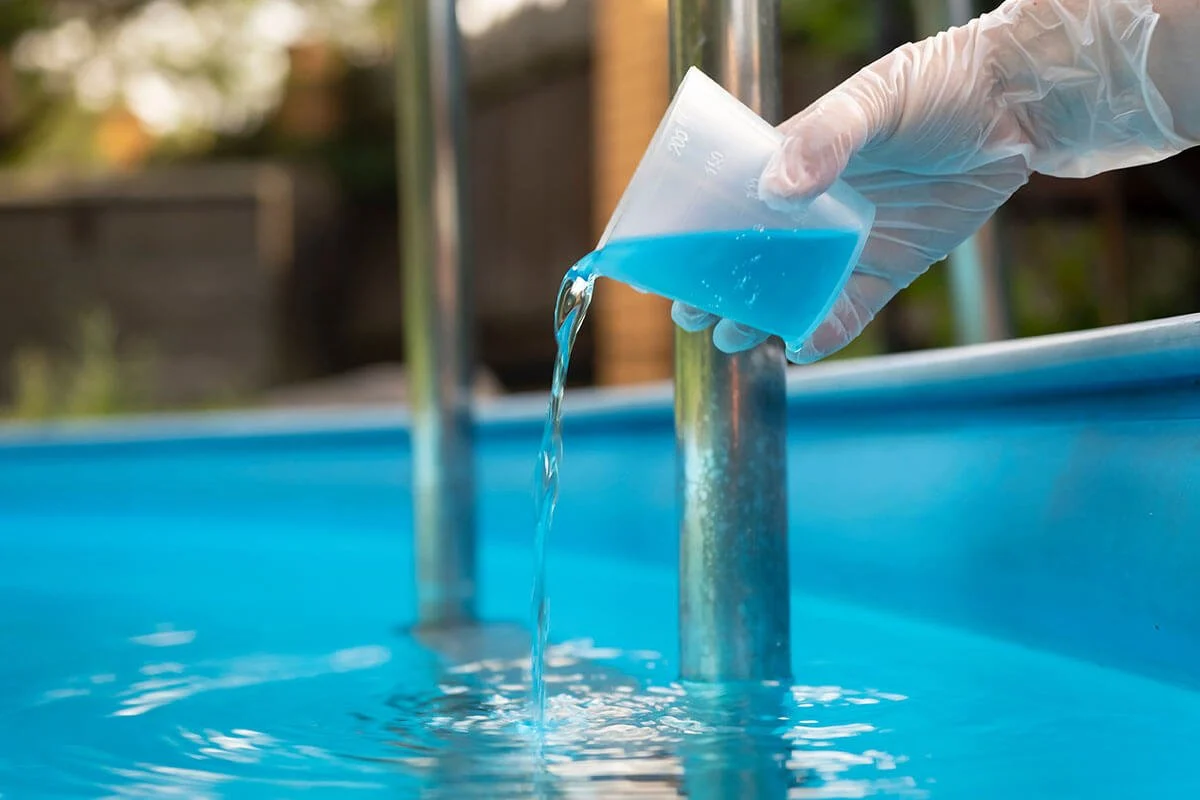
Maintaining balanced pool water is an important part of keeping a swimming pool comfortable, clean, and properly maintained. When pH becomes too high, water may become more prone to scaling, and sanitizer performance can be affected. Muriatic acid for pool maintenance is commonly used to lower high pH and can also reduce total alkalinity under the right conditions. Because it is a strong, corrosive chemical, pool owners should always test their water first and follow the product label carefully.
Pool chemistry should never be managed by guesswork. A test of pH and total alkalinity provides useful information about what the water actually needs before any chemical is added. Factors such as rainfall, evaporation, fresh-water additions, pool usage, and chemical treatments can change water conditions over time. Taking measurements before making adjustments helps prevent unnecessary treatment and reduces the risk of pushing the water chemistry too far in either direction.
What Is Muriatic Acid Used for in Pools?
Muriatic acid is a commercial form of hydrochloric acid used in pool maintenance to lower pH when testing shows that the water is too alkaline. It can also lower total alkalinity, depending on the amount used and the pool's existing chemistry. High pH may contribute to scale formation, cloudy water, and reduced effectiveness of some sanitizing processes. Properly managed pH supports more comfortable water and better overall pool maintenance.
The correct amount of acid varies from one pool to another. Pool volume, current pH, total alkalinity, product concentration, and the desired adjustment all affect the amount required. Pool owners should follow the manufacturer's directions rather than relying on a generic dosage found elsewhere. When water chemistry is difficult to interpret, a qualified pool professional can provide appropriate testing and maintenance guidance.
Why Keeping Pool pH Balanced Matters
pH describes how acidic or basic the pool water is and plays an important role in water comfort and maintenance. Water that is too acidic can be harsh on surfaces and equipment, while excessively high pH can encourage scale formation and affect sanitizer performance. Keeping pH within the range recommended for the particular pool and sanitation system helps create more stable water conditions. Regular testing is therefore an essential part of responsible pool care.
Total alkalinity should also be considered because it helps resist rapid changes in pH. If alkalinity is significantly outside the appropriate range, maintaining stable pH can become more difficult. This is why pool professionals generally evaluate both measurements instead of focusing on pH alone. Understanding how these two aspects of water chemistry interact makes chemical adjustments more predictable and controlled.
How Muriatic Acid Lowers Pool pH
Muriatic acid lowers the pH of pool water by increasing its acidity. It can also reduce total alkalinity when used as part of an appropriate water-balancing process. The exact effect depends on the pool's starting chemistry and how the treatment is applied. For this reason, testing before and after treatment is more dependable than assuming a particular amount will produce the same result in every pool.
After an appropriate acid treatment, pool water needs time to circulate and distribute the chemical throughout the system. Pool owners should follow the product instructions regarding application, circulation, and retesting. Avoid repeatedly adding acid before confirming the effect of the previous adjustment. Overcorrection can create low-pH water and lead to a different set of maintenance concerns.
Understanding Raising pH in a Swimming Pool
Muriatic acid lowers pH, so adding it to water that already has a low pH would move the chemistry in the wrong direction. Homeowners researching raising pH in swimming pool water should understand that muriatic acid is not used for this purpose. When testing confirms that pH is too low, a suitable alkaline product may be needed instead. The correct product and amount should be selected based on current test results and manufacturer guidance.
It is also important to distinguish low pH from low total alkalinity. These measurements are related but are not interchangeable, and correcting one does not always solve the other. A reliable test can help determine which parameter needs adjustment. When the readings are difficult to interpret, professional pool service can help identify the appropriate approach rather than relying on trial and error.
Safety Rules for Using Muriatic Acid
Muriatic acid is corrosive and should always be handled with care. Follow the manufacturer's label instructions, use the protective equipment specified on the product, and work outdoors or in a well-ventilated area. Avoid direct contact with skin and eyes and do not breathe concentrated vapors. Keep the chemical secured away from children, pets, and anyone who has not been trained to handle pool chemicals.
Never mix muriatic acid with chlorine products or other incompatible chemicals. Combining certain pool chemicals can produce dangerous reactions or toxic gases. Keep chemicals in their original labeled containers and store them according to the manufacturer's instructions. If you are uncomfortable handling a corrosive chemical or uncertain about the correct treatment, professional assistance is a safer option.
Common Mistakes to Avoid
One frequent mistake is adding muriatic acid without first testing the water. Pool water can look perfectly clear while having a pH that needs adjustment, so appearance alone is not a reliable measurement. Another common error is using a fixed amount without considering pool volume and product concentration. Following current test results and the specific product instructions helps reduce the chance of over-treatment.
Adding chemicals too close together can also make pool maintenance more complicated. Give the water adequate time to circulate and retest according to the product instructions before deciding whether another adjustment is needed. Keeping a simple record of pH, alkalinity, and chemical additions can help homeowners recognize patterns. This information can also be useful when discussing unusual water conditions with a pool professional.
Maintain Your Pool Water With a Safe Approach
Muriatic acid for pool maintenance can be an effective option when testing confirms that pH is too high or when a controlled reduction in alkalinity is appropriate. However, it is not a general-purpose pool chemical and should never be added simply because the water appears different. Accurate testing, careful measurement, proper circulation, and adherence to manufacturer instructions are essential parts of responsible use. These practices help homeowners make controlled adjustments while minimizing unnecessary chemical exposure.
For homeowners interested in raising ph in swimming pool water, muriatic acid should not be part of that treatment because its function is to lower pH. The appropriate response depends on whether pH, total alkalinity, or both measurements are outside the recommended range. Testing first and choosing a chemical specifically suited to the measured condition provides a more reliable approach. With careful water testing and safe maintenance practices, pool owners can support balanced water while protecting swimmers, surfaces, and equipment.
- Ask Nguza
- Food and Recipes
- Lifestyle
- Parenting
- Education
- Career & Business
- Sports
- Entertainment
- Marketing & Blogging
- Travel
- Confessions / Anonymous Talk
- Local News & Gossip
- Memes & Fun
- Art
- Hot Topics / Trending
- Causes
- Crafts
- Dance
- Drinks
- Film
- Fitness
- Food
- Games
- Gardening
- Health
- Home
- Literature
- Music
- Networking
- Other
- Party
- Religion
- Shopping
- Sports
- Theater
- Wellness
- Personal Development
- Technology
- Finance
 English
 Arabic
 French
 Spanish
 Portuguese
 Deutsch
 Turkish
 Dutch
Dutch
 Italiano
 Russian
 Romaian
 Portuguese (Brazil)
 Greek
Greek
