


First-Time Importer Consultancy in India
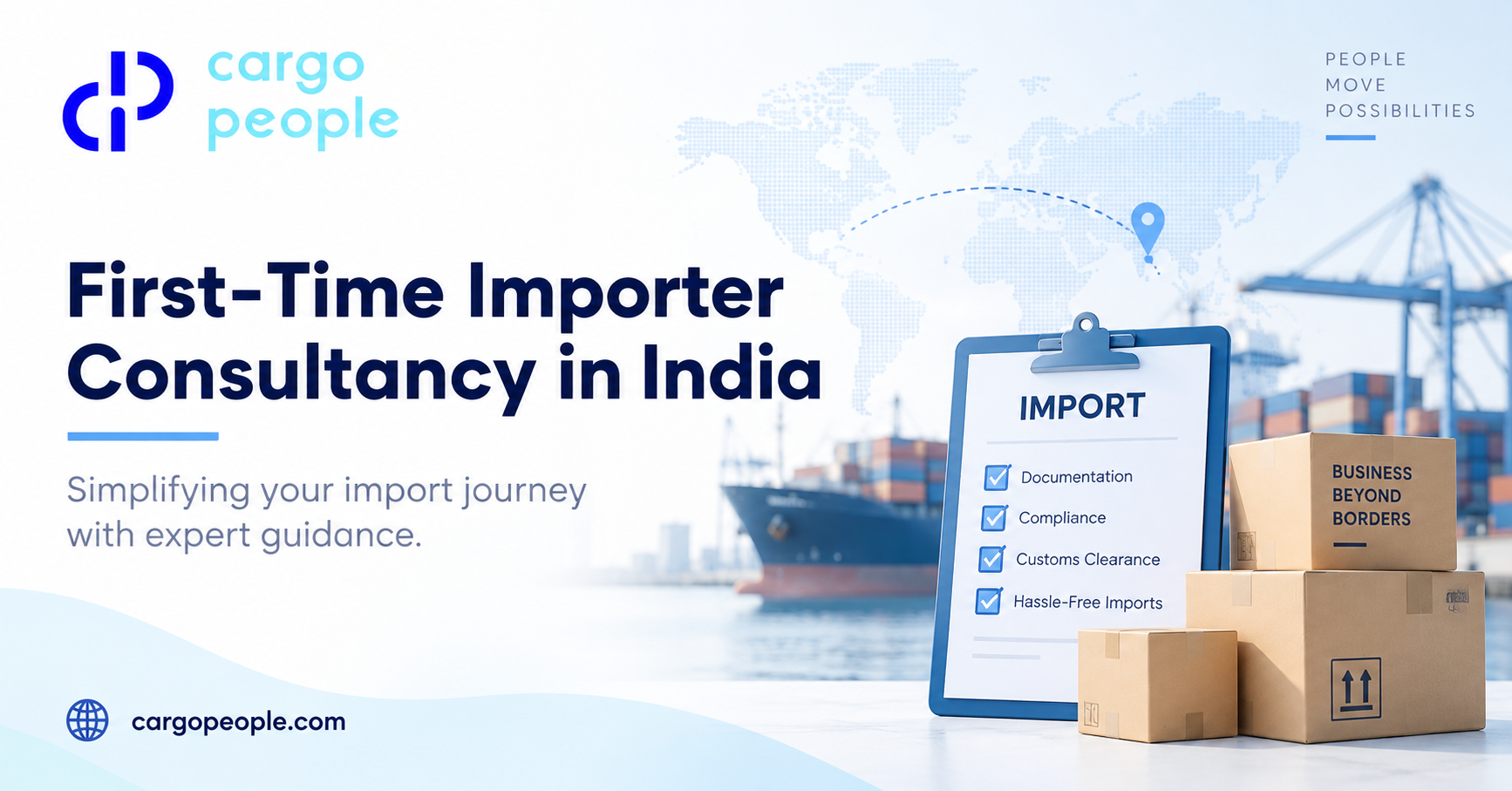
Importing goods into India for the first time can look straightforward - find an overseas supplier, negotiate the price, arrange shipping, and receive the cargo.
In practice, the process involves several important checks before the supplier should dispatch the goods.
A first-time importer may need to understand IEC registration, HS Code classification, import policy, customs duty, product-specific approvals, Incoterms, freight charges, documentation, customs clearance, insurance, and final delivery.
Missing even one important requirement can result in cargo being held at the airport or port, additional storage charges, customs queries, or unexpected landed costs.
A professional First-Time Importer Consultancy in India helps businesses review the complete import process before shipment so that commercial, compliance, customs, and logistics requirements can be planned together.
Cargo People Logistics & Shipping Pvt. Ltd. supports first-time importers with international freight forwarding, air freight, sea freight, FCL and LCL shipping, customs clearance, documentation, warehousing, cargo insurance coordination, and door-to-door delivery.
Who is a First-Time Importer?
A first-time importer may be a business purchasing commercial goods from an overseas supplier for the first time.
This may include:
- Manufacturers
- Traders
- Startups
- SMEs
- Distributors
- E-commerce businesses
- Engineering companies
- Machinery buyers
- Electronics businesses
- Automotive suppliers
- Industrial equipment companies
The first import shipment is important because businesses need to establish the correct documentation and logistics process from the beginning.
What Should Be Checked Before Importing Into India?
Before placing an overseas purchase order, businesses should review the complete import requirement.
Important checks include:
- IEC registration
- GST and business details
- HS Code
- Import policy
- Product-specific regulations
- Customs duty
- Country of origin
- Supplier documentation
- Incoterms
- Freight mode
- Cargo insurance
- Customs clearance
- Final delivery cost
The objective should be to understand the complete landed cost and compliance requirement before the supplier dispatches the shipment.
Step 1: Obtain IEC Registration
IEC stands for Importer Exporter Code and is an important requirement for businesses carrying out commercial imports, subject to applicable exemptions.
Businesses should ensure that their IEC details are accurate and consistent with other company records.
Important details may include:
- Business name
- PAN
- Registered address
- Bank details
- Contact details
- Authorized person details
IEC registration should ideally be completed before the first commercial cargo movement.
Step 2: Identify the Correct HS Code
Every imported product needs to be classified correctly for customs purposes.
The HS Code can influence:
- Customs duty
- Import policy
- Regulatory requirements
- Documentation
- Restrictions
- Product-specific compliance
A first-time importer should avoid choosing an HS Code only because another supplier or online source uses it.
The actual product description, composition, function, specifications, and intended use should be reviewed.
Step 3: Check Whether the Product Can Be Imported
IEC registration does not automatically mean every product can be imported freely.
Depending on the product, additional registrations, licences, certificates, or approvals may apply.
Extra compliance checks can be relevant for categories such as:
- Electronics
- Electrical products
- Wireless equipment
- Medical devices
- Pharmaceuticals
- Cosmetics
- Food products
- Chemicals
- Batteries
- Toys
- Restricted goods
- Certain industrial products
Product compliance should be checked before paying the supplier or arranging shipment.
Step 4: Calculate Customs Duty and Landed Cost
First-time importers sometimes compare only the overseas product price.
The actual cost after arrival in India can be significantly higher.
A complete landed cost may include:
- Product value
- Overseas transportation
- Origin charges
- Air or sea freight
- Cargo insurance
- Customs duty
- Port or airport handling
- Customs clearance charges
- Local transportation
- Warehousing
- Other applicable logistics costs
Businesses should calculate estimated landed cost before confirming the purchase order.
For example, a machine quoted at ₹10 lakh by an overseas supplier should not automatically be treated as a ₹10 lakh investment. Freight, duty, clearance, handling, insurance, and domestic transportation can increase the final cost.
Step 5: Understand Incoterms
Incoterms define important responsibilities between the overseas seller and the Indian buyer.
Common Incoterms include:
- EXW
- FCA
- FOB
- CFR
- CIF
- CPT
- CIP
- DAP
- DDP
A low supplier quotation may appear attractive until the importer understands which transportation and destination costs are excluded.
For example, under an EXW transaction, the Indian importer may need to coordinate transportation from the supplier's premises onward.
Businesses should understand the selected Incoterm before comparing supplier prices.
Step 6: Choose Air Freight or Sea Freight
The appropriate transportation mode depends on cargo size, value, urgency, and budget.
Air Freight may be suitable for:
- Urgent cargo
- High-value products
- Samples
- Electronics
- Spare parts
- Small shipments
- Production-critical materials
Sea Freight may be suitable for:
- Larger shipments
- Machinery
- Raw materials
- Bulk commercial goods
- Heavy products
- Less time-sensitive cargo
A first-time importer should compare total transportation cost and transit time rather than selecting a freight mode only because the base rate appears cheaper.
Step 7: Decide Between FCL and LCL
For sea freight imports, businesses may need to choose between FCL and LCL.
FCL means Full Container Load.
LCL means Less than Container Load.
LCL may be practical when the importer has only a few cubic metres of cargo and does not require an entire container.
FCL may become more suitable when:
- Cargo volume is larger
- Dedicated container space is preferred
- Handling needs to be reduced
- The shipment contains machinery or sensitive goods
For medium-sized shipments, businesses should compare both options before confirming the booking.
Step 8: Prepare Import Documents
Documentation should be reviewed before the supplier dispatches the goods.
Common import documents may include:
- Commercial Invoice
- Packing List
- Bill of Lading
- Air Waybill
- Purchase Order
- IEC details
- GST information
- Certificate of Origin, where applicable
- Insurance Certificate
- Product catalogue
- Technical literature
- Regulatory approvals, where applicable
- Import licence, where applicable
Product descriptions should be clear and consistent across documents.
Generic descriptions such as "parts," "equipment," or "samples" may create unnecessary clarification during customs processing.
Step 9: Review Commercial Invoice and Packing List
The Commercial Invoice and Packing List are two of the most important documents in an import shipment.
The invoice should correctly identify information such as:
- Buyer
- Seller
- Product
- Quantity
- Value
- Currency
- Country of origin
- Incoterm
The Packing List should clearly show:
- Number of packages
- Gross weight
- Net weight
- Package dimensions
- Packing method
Incorrect documents can create problems during freight booking and customs clearance.
Step 10: Arrange Cargo Insurance
International cargo can pass through several handling points before reaching the importer.
Goods may be exposed to risks involving:
- Handling damage
- Water exposure
- Theft
- Collision
- Fire
- Cargo shifting
- Container damage
- Loading and unloading incidents
First-time importers should understand whether insurance has been arranged and what the policy actually covers.
Cargo insurance should be reviewed according to cargo value, packaging, transportation mode, and route.
Step 11: Plan Customs Clearance Before Arrival
Customs clearance should not begin only after cargo reaches India.
Documents should ideally be reviewed before shipment departure.
Pre-arrival planning may help identify:
- Missing documentation
- Incorrect HS Code
- Compliance requirements
- Customs duty exposure
- Product description issues
- Certificate requirements
This is particularly important for air freight, where international transportation may take less time than document correction.
Step 12: Arrange Final Delivery
After customs clearance, the cargo still needs to reach the importer's warehouse, factory, office, or project site.
Final delivery planning should consider:
- Cargo weight
- Package dimensions
- Vehicle requirement
- Delivery location
- Unloading facility
- Crane or forklift requirements
- Warehouse availability
For machinery imports, delivery planning should ideally begin before cargo reaches India.
First-Time Imports From China
China is one of the major sourcing markets for Indian businesses.
First-time importers may purchase:
- Machinery
- Electronics
- Industrial components
- Auto parts
- Electrical equipment
- Packaging machinery
- Consumer products
- Furniture
- Production equipment
Before importing from China, businesses should review more than the supplier's FOB or EXW price.
The complete shipment should consider:
- Supplier location
- Origin freight
- Product compliance
- HS Code
- Customs duty
- Air or sea freight
- Destination charges
- Customs clearance
- Final delivery
This provides a more realistic landed cost.
First-Time Machinery Importers
Machinery imports require additional planning because equipment may be heavy, oversized, or difficult to unload.
Businesses should confirm:
- Machine dimensions
- Gross weight
- Packing method
- HS Code
- Country of origin
- Container type
- Loading method
- Customs requirements
- Delivery route
- Crane requirement
- Final installation location
Large machinery may require Flat Rack, Open Top, breakbulk, or ODC transportation instead of standard container shipping.
Common Mistakes Made by First-Time Importers
The first shipment can become expensive when important checks are completed too late.
Common mistakes include:
- Ordering goods before checking import policy
- Selecting an incorrect HS Code
- Assuming IEC is the only requirement
- Ignoring product-specific compliance
- Not calculating customs duty
- Comparing only supplier price
- Selecting freight only by lowest rate
- Not understanding Incoterms
- Using incomplete invoices
- Ignoring destination charges
- Not arranging cargo insurance
- Preparing customs documents after cargo arrival
- Not planning final transportation
- Importing large quantities without testing the process
Proper pre-import planning can reduce many of these risks.
Why Pre-Import Consultation is Important
A first-time importer may be coordinating several unfamiliar activities simultaneously.
The business needs to understand:
- Can the product legally be imported?
- What HS Code applies?
- What customs duty may apply?
- Does the product require additional approval?
- Should cargo move by air or sea?
- Should sea cargo move through FCL or LCL?
- Which Incoterm is suitable?
- What documents should the supplier prepare?
- How will customs clearance work?
- What will the total landed cost be?
Answering these questions before shipment is usually easier and less expensive than solving problems after cargo reaches India.
How a First-Time Importer Consultant Can Help
First-time importer consultancy can provide structured guidance before the business commits to an international shipment.
Support may include:
- Import process review
- IEC guidance
- HS Code coordination
- Import policy review
- Documentation checklist
- Product compliance coordination
- Estimated duty planning
- Incoterm guidance
- Freight mode selection
- FCL vs LCL planning
- Customs clearance planning
- Cargo insurance coordination
- Final delivery planning
The objective is to create a complete import roadmap rather than managing each activity separately.
First-Time Import Checklist
Before asking the overseas supplier to dispatch cargo, businesses should confirm:
- IEC is active and correct
- HS Code has been reviewed
- Import policy has been checked
- Product-specific approvals are available
- Customs duty has been estimated
- Incoterm is understood
- Commercial Invoice is correct
- Packing List is correct
- Freight mode is selected
- Freight quotation is reviewed
- Cargo insurance is considered
- Customs documents are prepared
- Final delivery is planned
- Total landed cost is understood
This simple review can prevent many avoidable first-shipment problems.
Why Choose Cargo People for First-Time Importer Consultancy in India?
Cargo People Logistics & Shipping Pvt. Ltd. supports businesses planning their first commercial import as well as companies handling regular international shipments.
Our services include:
- First-Time Import Logistics Planning
- Air Freight
- Sea Freight
- FCL Shipping
- LCL Shipping
- Import Customs Clearance
- Documentation Support
- Supplier Pickup Coordination
- Warehousing
- Cargo Insurance Coordination
- Door-to-Door Delivery
- Project Cargo Handling
- Shipment Tracking
Cargo People supports imports from major sourcing markets including China, Southeast Asia, the Middle East, Europe, and the United States.
Our focus is to help businesses understand the complete shipment before cargo moves - from supplier pickup and freight planning to customs clearance and final delivery.
Learn More About First-Time Importer Consultancy in India
Planning your first import into India?
Checking IEC, HS Code, import policy, compliance, duty, freight, Incoterms, documents, and landed cost before ordering helps avoid delays and extra costs. Cargo People Logistics & Shipping Pvt. Ltd. provides complete import logistics and customs clearance support.
👉 https://cargopeople.com/blog/first-time-importer-consultancy-india/
📞 Get Expert Assistance for Your First Import Shipment
If you need assistance with First-Time Importer Consultancy in India, import documentation, air freight, sea freight, FCL or LCL shipping, customs clearance, cargo insurance, warehousing, or door-to-door delivery, Cargo People Logistics & Shipping Pvt. Ltd. can help.
🌐 Website: https://www.cargopeople.com/
📞 Phone: +91 97174 65454
📧 Email: [email protected]
Contact Cargo People for first-time import planning and complete international logistics support.
- Ask Nguza
- Food and Recipes
- Lifestyle
- Parenting
- Education
- Career & Business
- Sports
- Entertainment
- Marketing & Blogging
- Travel
- Confessions / Anonymous Talk
- Local News & Gossip
- Memes & Fun
- Art
- Hot Topics / Trending
- Causes
- Crafts
- Dance
- Drinks
- Film
- Fitness
- Food
- Games
- Gardening
- Health
- Home
- Literature
- Music
- Networking
- Other
- Party
- Religion
- Shopping
- Sports
- Theater
- Wellness
- Personal Development
- Technology
- Finance
 English
 Arabic
 French
 Spanish
 Portuguese
 Deutsch
 Turkish
 Dutch
Dutch
 Italiano
 Russian
 Romaian
 Portuguese (Brazil)
 Greek
Greek
