


Managed Print Services Market Growth Driven By Hybrid Work And Endpoint Security
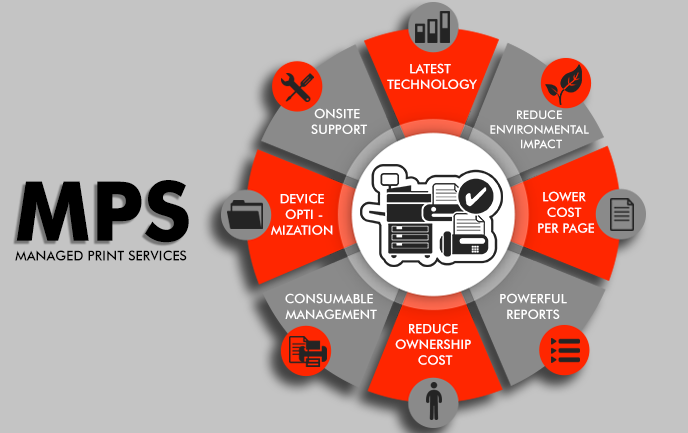
The Managed Print Services Market Growth trend is supported by hybrid work, rising security expectations, and the need for cost predictability. Even as organizations digitize, printing remains critical for contracts, invoices, regulated records, shipping labels, and customer-facing materials. Hybrid work complicates support because devices are spread across offices, branches, and sometimes home environments. MPS providers address this by offering centralized visibility, remote monitoring, and standardized configuration management. Growth is also driven by the realization that unmanaged print fleets create avoidable expenses: excess devices, inefficient consumables usage, and unplanned downtime. Providers help optimize device placement and usage policies, improving total cost of ownership. Additionally, procurement teams prefer contracted services that simplify budgeting and reduce ad hoc purchasing. As businesses seek operational resilience, proactive maintenance and automated supplies replenishment become valuable features that reduce interruptions and support productivity.
Security concerns are a major accelerator of market growth. Printers are often overlooked endpoints that can store sensitive documents, expose network access, and create data leakage risks. MPS programs increasingly include security assessments, device hardening, firmware management, and secure print release. Integration with identity systems enables user authentication and access controls. Audit logs and reporting help meet compliance requirements in regulated industries. As cyber programs mature, organizations want printers managed with the same discipline as laptops and servers. This drives adoption among enterprises seeking to reduce attack surface and standardize controls. Another growth driver is cloud print management. Cloud-based solutions reduce reliance on print servers, simplify remote user access, and improve scalability across sites. Providers also add analytics that detect unusual printing patterns, helping organizations identify potential misuse or policy violations. These capabilities elevate MPS from operational support to a component of broader security governance.
Workflow optimization further contributes to growth by reducing paper dependency and improving process efficiency. MPS providers often introduce scanning workflows like scan-to-cloud, scan-to-ERP, and automated routing to departments. This reduces manual handling and speeds approvals. Industries such as healthcare, legal, and logistics benefit from structured capture processes that maintain compliance and improve retrieval. Print rules—duplex defaults, color restrictions, and quota enforcement—reduce waste without blocking legitimate needs. Providers also consolidate and standardize device models, making training and support easier. Sustainability initiatives strengthen growth, as organizations seek to lower paper usage and energy consumption while improving recycling practices for cartridges and devices. Vendors respond with sustainability reporting and device lifecycle programs. As ESG reporting becomes more common, print reduction metrics and responsible disposal documentation can become part of procurement evaluation for MPS providers.
Sustaining market growth depends on customer experience and measurable outcomes. Users judge MPS by device availability, response times, and ease of printing securely. If shared-device strategies create friction, adoption suffers and shadow printing can reappear. Therefore, providers invest in service desks, onsite support options, and proactive maintenance. Buyers increasingly demand transparent reporting on uptime, ticket resolution, consumables usage, and savings realized. Contract flexibility matters as workplace footprints change; organizations may reduce office space or open new branch locations, requiring adaptable fleet planning. Over time, MPS will align more closely with digital workplace services, combining print management with document capture and automation. Providers that deliver strong security, reliable operations, and continuous optimization will continue to benefit from growth, even as overall print volumes gradually decline. The value proposition shifts from “more printing” to “better, safer, and cheaper printing,” supporting continued adoption across industries.
Top Trending Reports:
Remote Integration Solution Market
- Ask Nguza
- Food and Recipes
- Lifestyle
- Parenting
- Education
- Career & Business
- Sports
- Entertainment
- Marketing & Blogging
- Travel
- Confessions / Anonymous Talk
- Local News & Gossip
- Memes & Fun
- Art
- Hot Topics / Trending
- Causes
- Crafts
- Dance
- Drinks
- Film
- Fitness
- Food
- Games
- Gardening
- Health
- Home
- Literature
- Music
- Networking
- Other
- Party
- Religion
- Shopping
- Sports
- Theater
- Wellness
- Personal Development
- Technology
- Finance
 English
 Arabic
 French
 Spanish
 Portuguese
 Deutsch
 Turkish
 Dutch
Dutch
 Italiano
 Russian
 Romaian
 Portuguese (Brazil)
 Greek
Greek
