


Microsoft Azure Consultants: Helping Businesses Build Secure, Scalable, and Intelligent Cloud Solutions
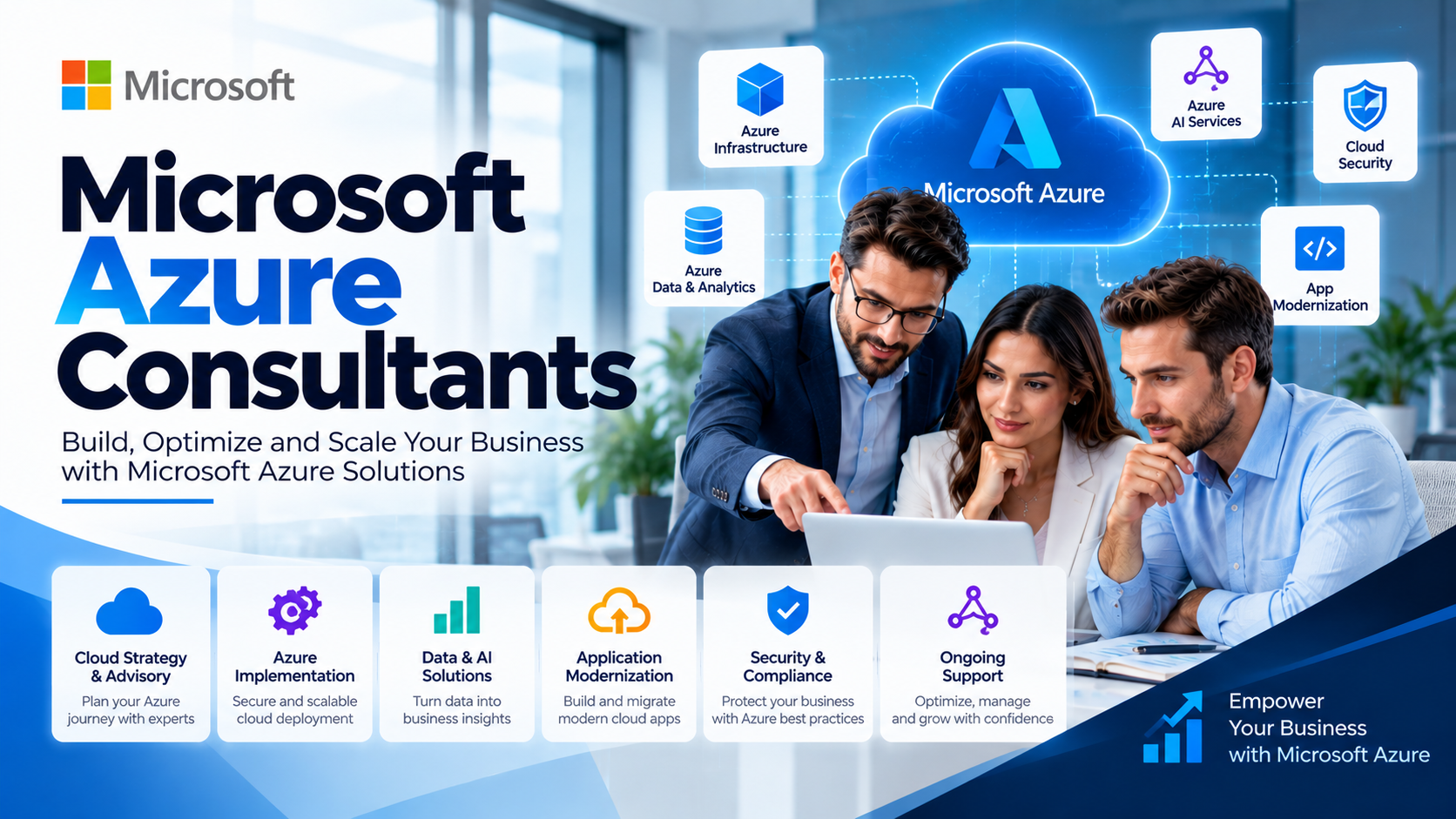
Cloud computing has become an essential part of modern business operations. Organizations increasingly rely on cloud technologies to manage data, improve collaboration, strengthen security, and support digital transformation. Microsoft Azure is one of the leading cloud computing platforms, offering a wide range of services for infrastructure management, application development, artificial intelligence, and data analytics.
However, moving business operations to the cloud requires more than selecting a technology platform. Organizations need careful planning, technical expertise, and ongoing optimization to ensure their cloud environments remain efficient, secure, and aligned with business objectives.
Professional Azure consulting helps businesses navigate these challenges and develop cloud strategies that support long-term growth.
What Is Microsoft Azure and Why Is It Important for Businesses?
Microsoft Azure is a cloud computing platform that provides infrastructure, platform services, and tools for building, deploying, and managing applications.
Businesses can use Azure to host applications, store information, manage databases, analyze data, and develop AI-powered solutions.
Some important Microsoft Azure capabilities include:
-
Azure Virtual Machines: Provide scalable computing resources for hosting applications and workloads.
-
Azure Storage: Supports cloud-based storage for different types of business data.
-
Azure SQL Database: Offers managed relational database capabilities.
-
Azure App Service: Enables organizations to build and host web applications.
-
Azure AI Services: Supports the development of intelligent business applications.
-
Microsoft Entra ID: Provides identity and access management capabilities.
By combining these services, organizations can create cloud environments designed around their specific operational requirements.
Why Businesses Are Moving Toward Microsoft Azure Cloud Solutions
Traditional IT infrastructure often requires significant investment in physical hardware, maintenance, and system upgrades.
Cloud computing provides an alternative that allows organizations to access computing resources according to their needs.
Microsoft Azure offers businesses several potential advantages.
Improved Scalability
Cloud resources can be adjusted as business requirements change, helping organizations respond to increased demand.
Flexible Infrastructure Management
Businesses can select cloud services based on workload requirements instead of maintaining every system on physical servers.
Business Continuity Support
Azure provides backup and disaster recovery capabilities that can support business continuity planning.
Advanced Data Analytics
Azure data services help organizations process, manage, and analyze business information.
Access to AI Technologies
Microsoft Azure enables businesses to develop AI-powered applications and intelligent workflows.
These advantages depend on appropriate architecture, configuration, and ongoing management.
Common Challenges Businesses Face During Azure Cloud Migration
Although cloud migration offers significant opportunities, organizations may encounter technical and operational challenges.
One common issue is migrating legacy applications that were originally designed for traditional infrastructure.
Businesses must also consider data security, network connectivity, application dependencies, and regulatory requirements.
Another challenge involves managing cloud costs. Without appropriate monitoring and resource optimization, organizations may experience unnecessary spending.
Employee training and internal technical expertise can also influence the success of cloud adoption.
A structured migration strategy helps organizations identify these challenges before making major infrastructure changes.
How Microsoft Azure Consultants Support Successful Cloud Transformation
Businesses planning cloud adoption often require professional guidance to select suitable technologies and establish a reliable implementation strategy. Experienced microsoft azure consultants help organizations evaluate existing IT infrastructure, identify cloud migration opportunities, and design Azure environments that align with operational goals.
Rather than recommending generic cloud solutions, consultants assess business requirements and develop customized strategies.
Professional Azure consulting services may include:
-
Cloud readiness assessments
-
Azure infrastructure planning and architecture
-
Cloud migration strategy development
-
Azure security and identity management
-
Application modernization
-
Data analytics and AI integration
-
Cloud cost monitoring and optimization
-
Ongoing technical support and performance management
For organizations pursuing digital transformation, Azure consulting can help reduce implementation complexity and support more effective technology investments.
Microsoft Azure Cloud Migration Services for Modern Enterprises
Cloud migration involves transferring applications, databases, and other IT resources from existing environments to cloud infrastructure.
A successful migration requires detailed planning and technical assessment.
Assessing Existing IT Infrastructure
The migration process begins with evaluating current applications, servers, databases, and dependencies.
This assessment helps identify which workloads are suitable for cloud migration.
Developing a Cloud Migration Strategy
Organizations can choose different migration approaches depending on application requirements.
Some workloads may be transferred with limited modifications, while others may benefit from modernization or redesign.
Implementing Azure Cloud Infrastructure
Azure resources must be configured according to security, networking, performance, and operational requirements.
Testing and Optimization
After migration, organizations should test application functionality, monitor performance, and evaluate cloud costs.
Continuous optimization helps maintain a reliable cloud environment.
Strengthening Business Security With Microsoft Azure
Cloud security is an important consideration for organizations handling sensitive business information.
Microsoft Azure provides security capabilities that help organizations protect applications, infrastructure, and data.
These include identity management, encryption, security monitoring, and threat detection.
However, cloud security follows a shared responsibility model, meaning organizations remain responsible for configuring and managing important aspects of their environments.
Professional Azure security consulting can help businesses implement:
-
Role-based access controls
-
Multifactor authentication
-
Secure network configurations
-
Data protection policies
-
Security monitoring procedures
-
Backup and disaster recovery strategies
Effective security planning helps organizations reduce exposure to potential risks while supporting compliance requirements.
Using Azure AI and Data Analytics for Smarter Business Decisions
Modern businesses generate significant amounts of operational data, but converting that information into useful insights can be challenging.
Microsoft Azure provides data analytics and artificial intelligence services that support business intelligence and intelligent application development.
Organizations can use Azure technologies for document processing, predictive analytics, information retrieval, and selected workflow automation tasks.
For example, a business may develop an AI-assisted document management solution to extract information from invoices or internal records.
Another organization may use Azure data services to consolidate information from different systems and improve reporting.
Successful implementation requires reliable data, appropriate security controls, and human oversight of important decisions.
Application Modernization With Microsoft Azure Services
Legacy applications can limit business flexibility, especially when they rely on outdated infrastructure or require extensive manual maintenance.
Application modernization involves updating existing software to improve performance, maintainability, security, or scalability.
Azure offers several services that support modernization, including Azure App Service, Azure Functions, and Azure Kubernetes Service.
Businesses may choose to modernize applications gradually rather than replace entire systems immediately.
An effective modernization strategy considers application dependencies, development resources, operational requirements, and expected business benefits.
Azure Cost Optimization and Cloud Resource Management
Cloud computing can provide flexible resource management, but spending must be monitored carefully.
Unnecessary resources, oversized virtual machines, and inefficient storage configurations may increase operational costs.
Azure cost optimization focuses on aligning cloud resource consumption with actual business needs.
Common optimization practices include:
-
Monitoring resource utilization
-
Selecting appropriate computing capacity
-
Reviewing storage requirements
-
Identifying unused cloud resources
-
Establishing budgets and cost alerts
-
Evaluating suitable pricing commitments
Professional cloud consultants can help organizations implement cost management practices while maintaining necessary performance and reliability.
How to Choose the Right Microsoft Azure Consulting Partner
Selecting a consulting partner is an important decision for businesses planning cloud migration or infrastructure modernization.
Organizations should evaluate potential providers based on relevant technical experience and their ability to understand business requirements.
Azure Technical Expertise
Look for experience with Azure infrastructure, networking, databases, cloud security, and application development.
Cloud Migration Experience
A consulting provider should understand migration planning, application dependencies, testing, and deployment strategies.
Security and Compliance Knowledge
Consultants should consider organizational security policies and applicable regulatory requirements.
Customized Cloud Strategies
Cloud solutions should reflect specific business objectives rather than follow a standardized implementation model.
Ongoing Support and Optimization
Long-term cloud success requires performance monitoring, security updates, and resource optimization.
The Future of Microsoft Azure and Cloud Computing
Cloud computing continues to evolve as organizations adopt artificial intelligence, advanced analytics, and modern application development technologies.
Microsoft Azure provides a foundation for businesses exploring these capabilities.
AI-powered applications, cloud-native development, and intelligent automation are expected to remain important areas of enterprise technology investment.
However, organizations should evaluate emerging solutions based on practical business requirements, security considerations, and measurable outcomes.
A well-planned cloud strategy can help businesses remain adaptable as technology evolves.
Conclusion
Microsoft Azure offers organizations powerful tools for cloud infrastructure, application development, data analytics, artificial intelligence, and security management.
However, successful cloud adoption requires strategic planning, technical expertise, and continuous optimization.
Professional Azure consulting can help businesses navigate migration challenges, strengthen cloud security, modernize applications, and manage operational costs.
By combining the right Azure technologies with a clear implementation strategy, organizations can build scalable, reliable, and future-ready digital environments. Read more blogs
- Ask Nguza
- Food and Recipes
- Lifestyle
- Parenting
- Education
- Career & Business
- Sports
- Entertainment
- Marketing & Blogging
- Travel
- Confessions / Anonymous Talk
- Local News & Gossip
- Memes & Fun
- Art
- Hot Topics / Trending
- Causes
- Crafts
- Dance
- Drinks
- Film
- Fitness
- Food
- Jogos
- Gardening
- Health
- Início
- Literature
- Music
- Networking
- Outro
- Party
- Religion
- Shopping
- Sports
- Theater
- Wellness
- Personal Development
- Technology
- Finance
 Portuguese (Brazil)
 English
 Arabic
 French
 Spanish
 Portuguese
 Deutsch
 Turkish
 Dutch
 Italiano
 Russian
 Romaian
 Greek
