


Tree Pruning or Tree Removal in Christchurch How to Make the Right Decision
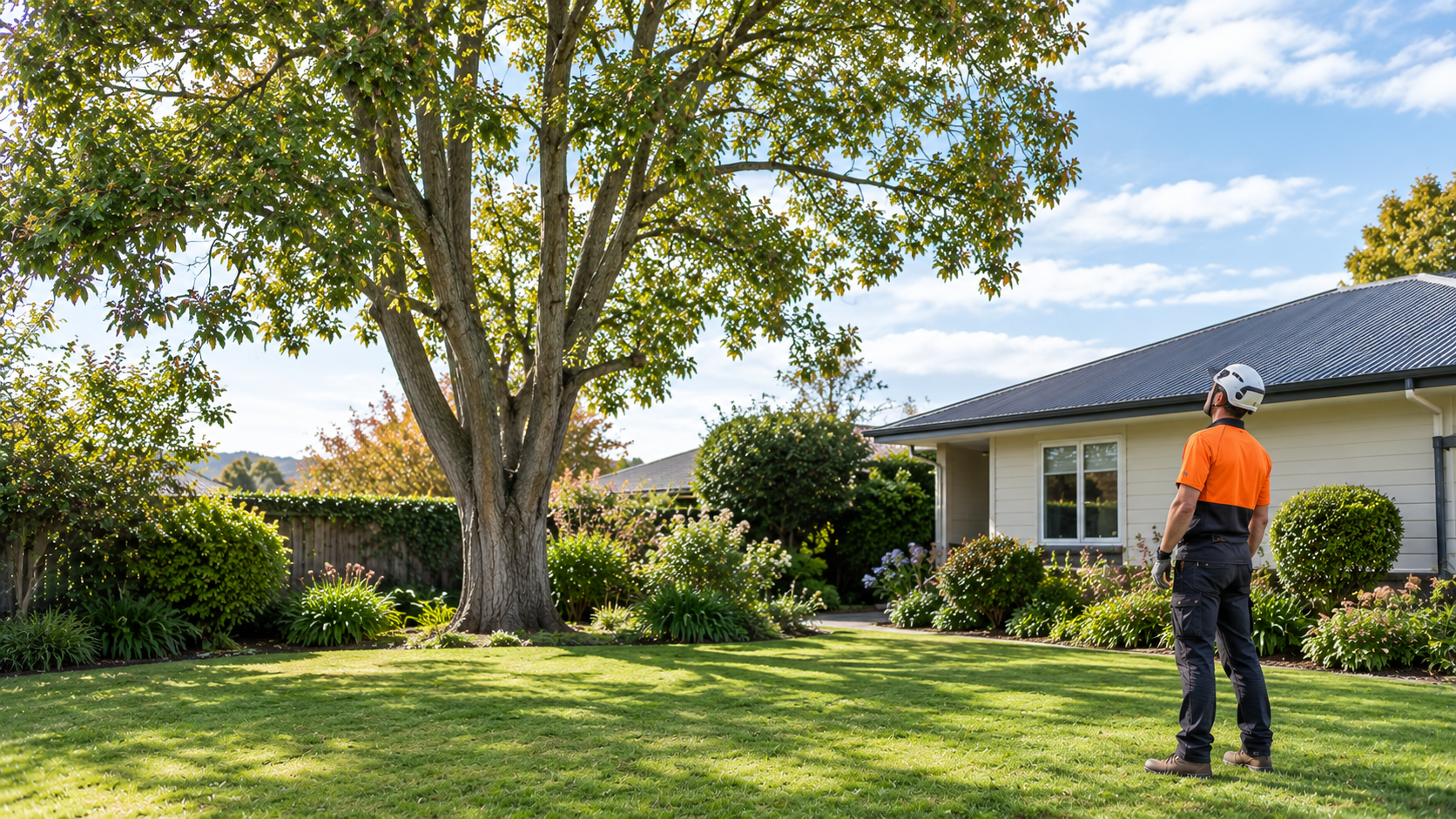
A tree that has become inconvenient does not always need to come down, and a tree that looks attractive does not always belong in its current position indefinitely. Christchurch homeowners often face the decision when branches crowd a roof, a canopy shades the house or damage appears after wind. The useful first step is to describe the problem and arrange an assessment that considers the tree, its surroundings and the consequences of each option.
For anyone exploring tree removal in Christchurch, the decision should follow an understanding of whether retention is practical. Garden & Tree Men offers removal as well as pruning and shaping, so those options can be discussed together. A clear recommendation should explain the reason for the proposed work rather than assume that every overgrown tree needs removal or every mature specimen can be kept through repeated cutting.
Separate inconvenience from condition
Start by distinguishing what you observe from what it might mean. A tree may block afternoon light, drop leaves into a gutter or interfere with a planned garden bed. Those are property-use concerns. A split branch, a newly leaning trunk or visible changes around the root area raise different questions about condition and stability. The two categories can overlap, but they should not be treated as interchangeable evidence.
Write down when the issue began and whether it has changed. A lean visible in old photographs may mean something different from a lean that appeared recently. A dead twig within a large canopy does not tell you the same thing as a major suspended limb. Report the details without attempting to diagnose the tree yourself. Photographs taken safely from the ground can support the initial conversation.
If a branch appears unstable, do not walk underneath to obtain a better image. Keep people away from the area and contact an appropriate professional. If electrical lines or immediate danger are involved, contact the relevant emergency or electricity service. An urgent concern needs a safety response before a comparison of landscaping options. The assessment should be arranged without exposing the household to the hazard being investigated.
Identify what the tree contributes
Before deciding on removal, consider the tree's benefits. It may provide shade over an outdoor area, screen a neighbouring window or give the garden much of its character. Those functions can be difficult to replace immediately with young planting. A decision that solves a light problem at one window can create a privacy problem elsewhere. Look at the whole property, including how it is used in different seasons.
There may also be practical effects on the planting below. A bed accustomed to shade will experience different conditions if the canopy disappears. Exposed areas may need another planting scheme or changes in care. A removal quote is therefore only part of the planning. Think about what the garden should become afterwards and whether the household is ready for the associated establishment work.
Retention has costs too. A tree in a constrained position may require repeated specialist attention. It could remain incompatible with a building or essential access even after reasonable pruning. Ask whether the proposed work is likely to resolve the issue for a useful period, or whether it will leave the same conflict returning quickly. The answer should help you compare future maintenance with a planned change to the garden.
Understand what pruning can reasonably achieve
Pruning can address particular branches, improve clearance and manage selected parts of the canopy. Its usefulness depends on species, structure, condition and the desired result. Removing one interfering branch is a different proposal from reducing the whole crown. Ask which parts of the tree would be changed and how the work connects to your concern. A specific plan is easier to evaluate than a promise to tidy it up.
Reducing size does not make a tree permanently small. It remains a living plant with a growth habit and a response to cutting. A substantial reduction may produce further growth that needs management, and an unsuitable cut can create new problems. Ask about anticipated regrowth and any follow-up. The objective should be a practical retained tree, not merely a smaller silhouette on the day of completion.
Avoid assuming that removing more growth produces proportionally more safety or more benefit. The appropriate amount of pruning needs professional judgement. Large unnecessary cuts can compromise the tree and change future maintenance demands. If the proposed reduction seems drastic, ask why it is required, whether a staged approach is possible and what the tree is expected to retain afterwards.
Examine the site constraints
The same tree can present very different practical issues depending on its location. A specimen in open lawn may be easier to manage than one growing beside a glasshouse, fence and narrow access passage. Overhead lines, underground services and neighbouring structures all matter. The assessment needs to include these surroundings rather than focus only on trunk diameter or height.
On a Christchurch property in Riccarton or St Albans, access might be limited by buildings close to a side boundary. On a Cashmere section, slope may affect equipment and handling. A garden in Harewood may have a different combination of open space and structures. These are possible site situations rather than suburb-wide assumptions. Decisions and quotes should follow the actual property layout.
Mention future projects early. If a driveway, extension or path is proposed near a retained tree, root protection may affect the design. Cutting visible roots to make a new surface fit can have consequences for health and stability. Coordinate the arborist's advice with the relevant project professionals before work begins. Treating tree care as a final obstacle after construction plans are fixed can make suitable options harder to find.
Compare a realistic retention proposal with removal
For a tree that can remain, tree shaping and crown reduction may help address canopy spread or selected clearance concerns. Garden & Tree Men describes species-specific assessment as part of its shaping service. Ask for the proposed result in plain language, including the amount of change, its limitations and the expected need for later attention. A useful alternative to removal should be concrete enough to compare.
Removal may be more appropriate when professional assessment identifies a condition or conflict that cannot reasonably be managed through retention. It can also be part of a permitted redesign where the tree is unsuitable for the long-term layout. The decision should state the reason, not rely on age alone or on a broad claim that large trees are inherently dangerous. Size and maturity are only parts of the assessment.
Compare the two options over a sensible planning period. Retention may involve an initial prune, later review and ongoing care. Removal may involve dismantling, debris handling, stump work and replacement planting. Do not compare a complete retention plan with a removal price that excludes the work needed to make the space usable again. Ask what each option leaves you with, both immediately and afterwards.
Check the permission position before committing
Establish ownership and confirm whether protection rules, consent conditions or other restrictions apply. A private garden location is not enough to conclude that substantial work is unrestricted. For Christchurch properties, check with Christchurch City Council where needed. The position in Kaiapoi or Rangiora should be confirmed through the relevant Waimakariri District Council information rather than assumed from a Christchurch example.
If a tree stands near a boundary, discuss the work with affected neighbours early. Even when the ownership is clear, access, screening and debris handling can affect another household. A shared understanding is useful, but it should be accompanied by any required permission or advice. Where rights or ownership remain disputed, resolve that uncertainty before arranging irreversible work.
Ask who will investigate permissions and who will obtain any necessary approval. Do not allow a vague mention of council matters in a quote to substitute for confirmation. Retain the relevant records and make sure the approved scope matches the planned work. Conditions attached to a permission may affect timing, methods or follow-up, so they need to be understood before the crew is scheduled.
Understand how removal affects the garden
Removal requires a plan for the space around the tree. The provider may need an exclusion area, equipment access and a route for moving material. Discuss vulnerable surfaces and planting before the job. If logs are to remain, agree where they will be placed and whether that location is accessible. If all material is to leave, make sure disposal is included in the quote.
Stump work should be named separately. Grinding can reduce the stump below the surface, but it does not necessarily extract the whole root system or prepare the site for construction. Explain whether you want lawn, planting or a hard surface afterwards. Each use may require different follow-up. A clear next step prevents a homeowner from discovering that the removal has created another unplanned project.
Replacement planting can preserve some of the lost function over time. Choose according to mature size, light, soil, available root space and the maintenance you can sustain. A young tree placed in the same constrained location may recreate the original problem. Consider a position and species suited to the garden's future layout rather than selecting only for its appearance at purchase.
Recognise the limits of photographs and quick opinions
Photographs are useful for explaining a concern and arranging an assessment, but they cannot establish every feature of tree condition. Hidden decay, root issues and the significance of structural defects may need closer professional evaluation. A short online opinion should not be treated as a definitive safety clearance. Equally, an alarming photograph does not always establish that removal is the only reasonable response.
Ask what the assessor can conclude and what remains uncertain. Further investigation may sometimes be appropriate before a decision. A useful explanation makes the uncertainty understandable and connects it to the next action. That might be monitoring, a more detailed assessment or a specific intervention. You should know whether a recommendation is based on a confirmed issue or on information that still needs checking.
Tree risk cannot be reduced to zero by a simple visual promise. A retained tree will continue to grow and respond to weather and site changes. After substantial pruning or a significant event, ask whether review is recommended. Keep the record of the original concern and the completed work so future observations can be compared against something more reliable than memory.
Prepare questions for the site visit
Ask what is causing the conflict, whether pruning can address it and what limitations remain. Ask what would justify removal, how the site would be protected and what permissions need checking. These questions keep the assessment focused on a decision. They also make it easier to distinguish a thoughtful proposal from a generic recommendation that does not reflect the property.
Request a scope that identifies retained trees as well as those proposed for removal. On a busy site, clear identification reduces confusion. Photographs, location descriptions or another agreed method can help. Confirm whether the stump, wood, chips and final cleanup are included. If a second stage is needed, such as replanting or lawn restoration, identify who will manage it and when it can reasonably begin.
Take time to review a non-urgent recommendation before accepting. A large tree decision can change the property for years, and a clear written explanation should survive that review. If the scope is unclear, ask for clarification. If the advice remains difficult to reconcile with your objectives, a further qualified opinion may help. The aim is a decision you understand, not merely a booking date.
Account for changes beyond your boundary
A tree decision can alter the way wind, light and views reach another part of the property. Before agreeing a substantial change, consider neighbouring planting and structures as part of the conversation. Removing one tree may expose plants that previously grew in shelter, while retaining it may require coordination with work planned nearby. These effects deserve discussion even when ownership is straightforward.
If several trees form a screen, assess the group rather than evaluating each in complete isolation. A staged change may suit the garden better than simultaneous removal, but that depends on condition and the intended use of the space. Ask the assessor to explain the relationship between the individual recommendation and the wider garden plan.
The right choice for a Christchurch garden depends on the tree's condition, the problem it creates and the value it provides. Pruning, monitoring and removal each have a place when supported by a suitable assessment. Homeowners in the confirmed service area can discuss tree care options with Garden & Tree Men and ask for a scope that explains the preferred approach, the permission checks and the condition the garden will be left in.
- Ask Nguza
- Food and Recipes
- Lifestyle
- Parenting
- Education
- Career & Business
- Sports
- Entertainment
- Marketing & Blogging
- Travel
- Confessions / Anonymous Talk
- Local News & Gossip
- Memes & Fun
- Art
- Hot Topics / Trending
- Causes
- Crafts
- Dance
- Drinks
- Film
- Fitness
- Food
- Games
- Gardening
- Health
- Home
- Literature
- Music
- Networking
- Other
- Party
- Religion
- Shopping
- Sports
- Theater
- Wellness
- Personal Development
- Technology
- Finance
 English
 Arabic
 French
 Spanish
 Portuguese
 Deutsch
 Turkish
 Dutch
 Italiano
 Russian
 Romaian
 Portuguese (Brazil)
 Greek
