


How Do Nakshatras Influence a Hindu Kundali
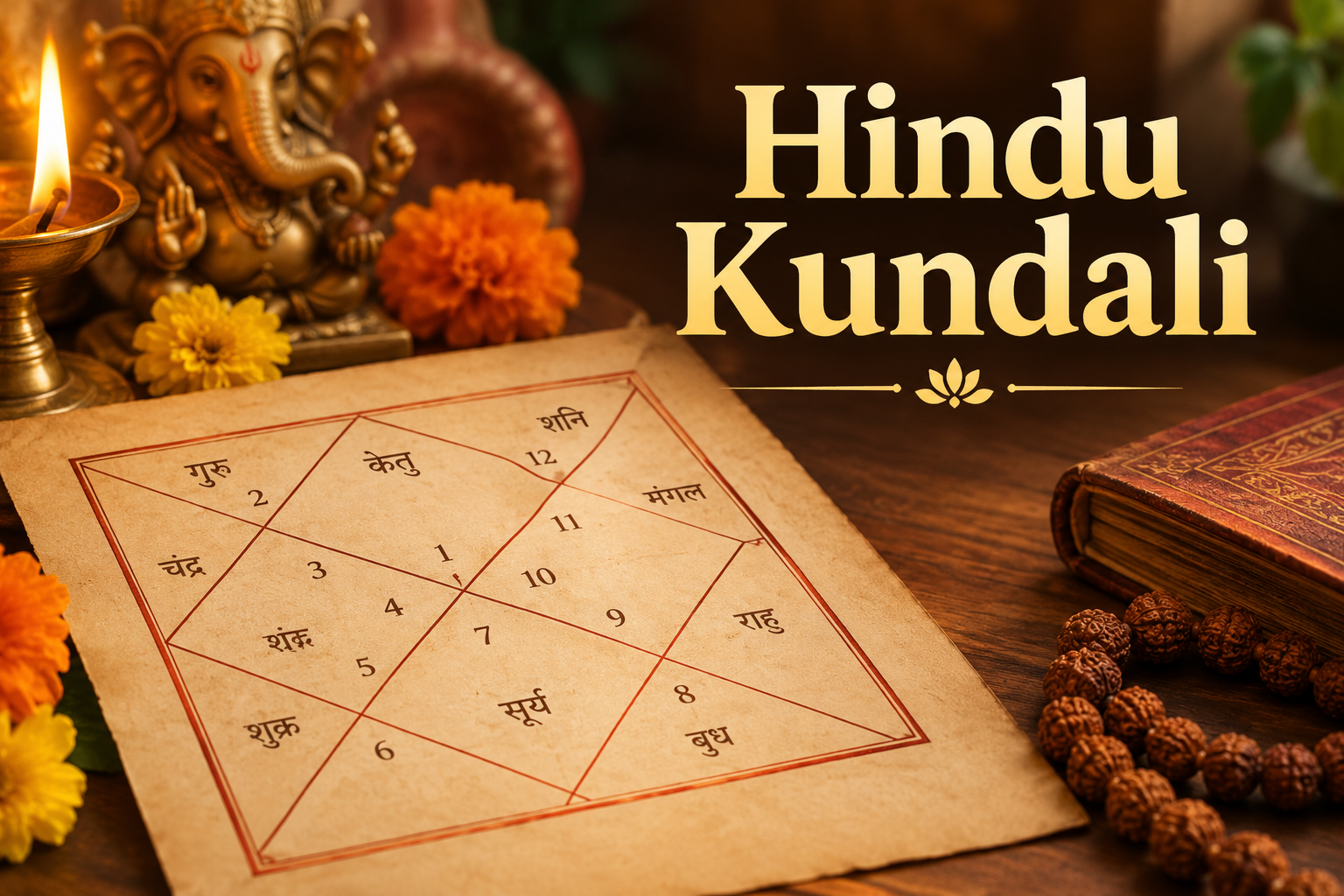
How Do Nakshatras Influence a Hindu Kundali?
Nakshatras are an important part of Vedic astrology and play a significant role in interpreting a Hindu Kundali. Also known as lunar mansions, Nakshatras divide the zodiac into 27 sections, each covering 13 degrees and 20 minutes. In traditional Vedic astrology, the position of the Moon at the time of birth determines a person's Janma Nakshatra, or birth star.
While zodiac signs provide one level of information in a Kundali, Nakshatras are traditionally used to provide more detailed insights into personality, emotions, relationships, life tendencies, and planetary periods. Understanding Nakshatras can therefore help explain how a Hindu Kundali is interpreted in greater depth.
What Are Nakshatras?
The zodiac in Vedic astrology is divided into 27 Nakshatras, beginning with Ashwini and ending with Revati. Each Nakshatra covers 13 degrees and 20 minutes of the zodiac.
The 27 Nakshatras are:
-
Ashwini
-
Bharani
-
Krittika
-
Rohini
-
Mrigashira
-
Ardra
-
Punarvasu
-
Pushya
-
Ashlesha
-
Magha
-
Purva Phalguni
-
Uttara Phalguni
-
Hasta
-
Chitra
-
Swati
-
Vishakha
-
Anuradha
-
Jyeshtha
-
Mula
-
Purva Ashadha
-
Uttara Ashadha
-
Shravana
-
Dhanishtha
-
Shatabhisha
-
Purva Bhadrapada
-
Uttara Bhadrapada
-
Revati
Each Nakshatra has its own traditional symbolism, ruling planet, deity, qualities, and characteristics.
How Is a Person's Nakshatra Determined?
The Moon's position at the exact time of birth is used to determine the Janma Nakshatra. This is why accurate birth information is important when preparing a Hindu Kundali.
The Moon moves relatively quickly through the zodiac, changing Nakshatras approximately every day. As a result, even people born on the same date may have different Nakshatras if their birth times or locations differ.
The Nakshatra is further divided into four sections called Padas. Each Nakshatra therefore contains four Padas, providing an additional level of detail in traditional astrological interpretation.
Why Is the Moon Important in Nakshatra Analysis?
In Vedic astrology, the Moon is traditionally associated with the mind, emotions, habits, and inner nature. Because the Moon's position determines the Janma Nakshatra, astrologers often use it to understand emotional patterns and personality tendencies.
For example, a person's Moon Nakshatra may traditionally be considered when discussing how they respond to situations, communicate emotionally, form attachments, or handle changes.
This makes Nakshatra analysis an important part of interpreting the emotional and psychological aspects of a Hindu Kundali.
How Do Nakshatras Influence Personality?
Each Nakshatra is traditionally associated with specific characteristics. Some are considered energetic and ambitious, while others are associated with creativity, communication, stability, spirituality, or transformation.
The Nakshatra itself is not normally interpreted in isolation. Astrologers may also examine its ruling planet, the Pada, the Moon's sign, planetary aspects, and the placement of other planets in the Kundali.
Therefore, two people with the same zodiac sign may still have different personality interpretations if their Moon Nakshatras are different.
Nakshatras and Kundali Matching
One of the most important uses of Nakshatras is marriage compatibility. Traditional Hindu Kundali matching often uses the Nakshatras of both individuals as part of the Ashtakoota or Guna Milan system.
Factors such as Tara, Yoni, Gana, and Nadi are calculated using the Nakshatras. The resulting analysis contributes to the overall compatibility score, which traditionally has a maximum of 36 points.
For example, Gana Koota compares the traditional temperament classifications of the Nakshatras, while Nadi Koota considers the Nadi assigned to each person's Nakshatra.
However, Kundali matching is a traditional practice and should not be treated as a scientifically proven method for determining whether a marriage will succeed.
What Are Nakshatra Lords?
Every Nakshatra is associated with one of the nine planetary rulers used in Vedic astrology. These planetary rulers repeat in a specific sequence throughout the 27 Nakshatras.
The ruling planet is traditionally believed to influence the qualities associated with that Nakshatra. It also plays an important role in determining the starting point of the Vimshottari Dasha system.
For example, the Nakshatra occupied by the Moon at birth determines which planetary Dasha begins first and how much of that period remains at birth.
Nakshatras and Vimshottari Dasha
The Vimshottari Dasha system is one of the most commonly discussed planetary-period systems in Vedic astrology. The Moon's birth Nakshatra determines the first Mahadasha in this system.
The remaining portion of the Nakshatra at birth is used to calculate the balance of the first planetary period. Subsequent Dashas follow a predetermined sequence.
Traditionally, astrologers use these periods to interpret different phases of life, including possible developments related to career, relationships, education, finances, and personal growth.
What Are Nakshatra Padas?
Each Nakshatra is divided into four Padas, or quarters. Each Pada covers 3 degrees and 20 minutes.
Padas are traditionally used to provide greater detail when interpreting a person's Nakshatra. They may influence characteristics, tendencies, and certain chart calculations.
The Pada can also help determine the Navamsa placement associated with the Moon's position, which is another important consideration in Vedic astrology.
Do Nakshatras Affect Career and Life Decisions?
Traditional astrologers may use Nakshatras when discussing career interests, skills, relationships, and important life events. Certain Nakshatras are traditionally associated with particular qualities or activities.
However, these interpretations should be understood as part of the traditional framework of Vedic astrology rather than scientifically established predictions.
Career and life decisions are influenced by many practical factors, including education, experience, financial circumstances, personal interests, opportunities, and individual choices.
Why Are Nakshatras Important in a Hindu Kundali?
Nakshatras add another layer of detail to a Hindu Kundali. While zodiac signs and houses provide a broad framework, Nakshatras are traditionally used to examine more specific qualities and timing techniques.
They are especially important for determining the Janma Nakshatra, analyzing emotional tendencies, conducting traditional Kundali matching, and calculating Vimshottari Dasha periods.
For people interested in Vedic astrology, learning about Nakshatras can therefore provide a deeper understanding of how a Hindu Kundali is traditionally interpreted.
Conclusion
Nakshatras play a significant role in a Hindu Kundali by providing a detailed lunar-based framework for traditional astrological interpretation. The Moon's position at birth determines the Janma Nakshatra, which can then be examined through its ruling planet, deity, symbolism, qualities, and four Padas.
Nakshatras are used in traditional practices ranging from personality analysis and marriage matching to planetary Dasha calculations. They can provide an interesting insight into the cultural and spiritual traditions surrounding Vedic astrology.
At the same time, Nakshatra interpretations are not scientifically proven methods of predicting personality or future events. They are best understood as part of India's long-standing astrological tradition and can be explored alongside practical judgment and personal experience.
- Ask Nguza
- Food and Recipes
- Lifestyle
- Parenting
- Education
- Career & Business
- Sports
- Entertainment
- Marketing & Blogging
- Travel
- Confessions / Anonymous Talk
- Local News & Gossip
- Memes & Fun
- Art
- Hot Topics / Trending
- Causes
- Crafts
- Dance
- Drinks
- Film
- Fitness
- Food
- Games
- Gardening
- Health
- Home
- Literature
- Music
- Networking
- Other
- Party
- Religion
- Shopping
- Sports
- Theater
- Wellness
- Personal Development
- Technology
- Finance
 English
 Arabic
 French
 Spanish
 Portuguese
 Deutsch
 Turkish
 Dutch
Dutch
 Italiano
 Russian
 Romaian
 Portuguese (Brazil)
 Greek
Greek
